Short answer
Burning, tingling and numb feet are signs of nerve damage, called peripheral neuropathy, and they are worth getting checked rather than waiting out. There are more than 100 types of peripheral neuropathy, each with its own symptoms and likely course, and early diagnosis and treatment give you the best chance of controlling symptoms and preventing further damage.
Finding the cause matters most. For people with diabetes, managing blood glucose, blood pressure and cholesterol is the way to prevent nerve damage. Therapies such as laser and shockwave are used to ease symptoms, but the research on them is early and they do not replace finding and treating the cause.
At Charleston Pain Relief Center in North Charleston, SC, we look at the whole picture, and we will tell you plainly if you need a medical workup first.
Pain Relief · North Charleston
Get your neuropathy relief plan by text
One tap sends us a text that is already written for you. We reply with what we would look at, what it costs, and this week’s openings.
★ Your 15-minute consult is free
Prefer to talk? Call 843-604-2276

Scan it with your phone camera
The message is already written. Send it and we reply with the details.
On your phone right now? Call 843-604-2276
Where the research in this article comes from
We would rather you check our numbers than take our word for them. The facts about what neuropathy is, what causes it and how it is diagnosed come from the National Institute of Neurological Disorders and Stroke, part of the National Institutes of Health, from the National Institute of Diabetes and Digestive and Kidney Diseases on diabetic neuropathy, and from the Mayo Clinic patient guide. On laser therapy, the main study is a 2019 systematic review of six studies of low-level laser for painful diabetic neuropathy. Full citations are at the end. From here on we will refer to them as the NIH pages, the patient guide and the 2019 review.What is peripheral neuropathy?
Peripheral neuropathy is damage to the peripheral nervous system, the network that carries signals between the brain and spinal cord and the rest of the body. More than 100 types have been identified, each with its own symptoms and likely course. Most are “length-dependent,” meaning symptoms start or are worst in the feet, the nerve endings farthest from the brain.Symptoms of peripheral neuropathy
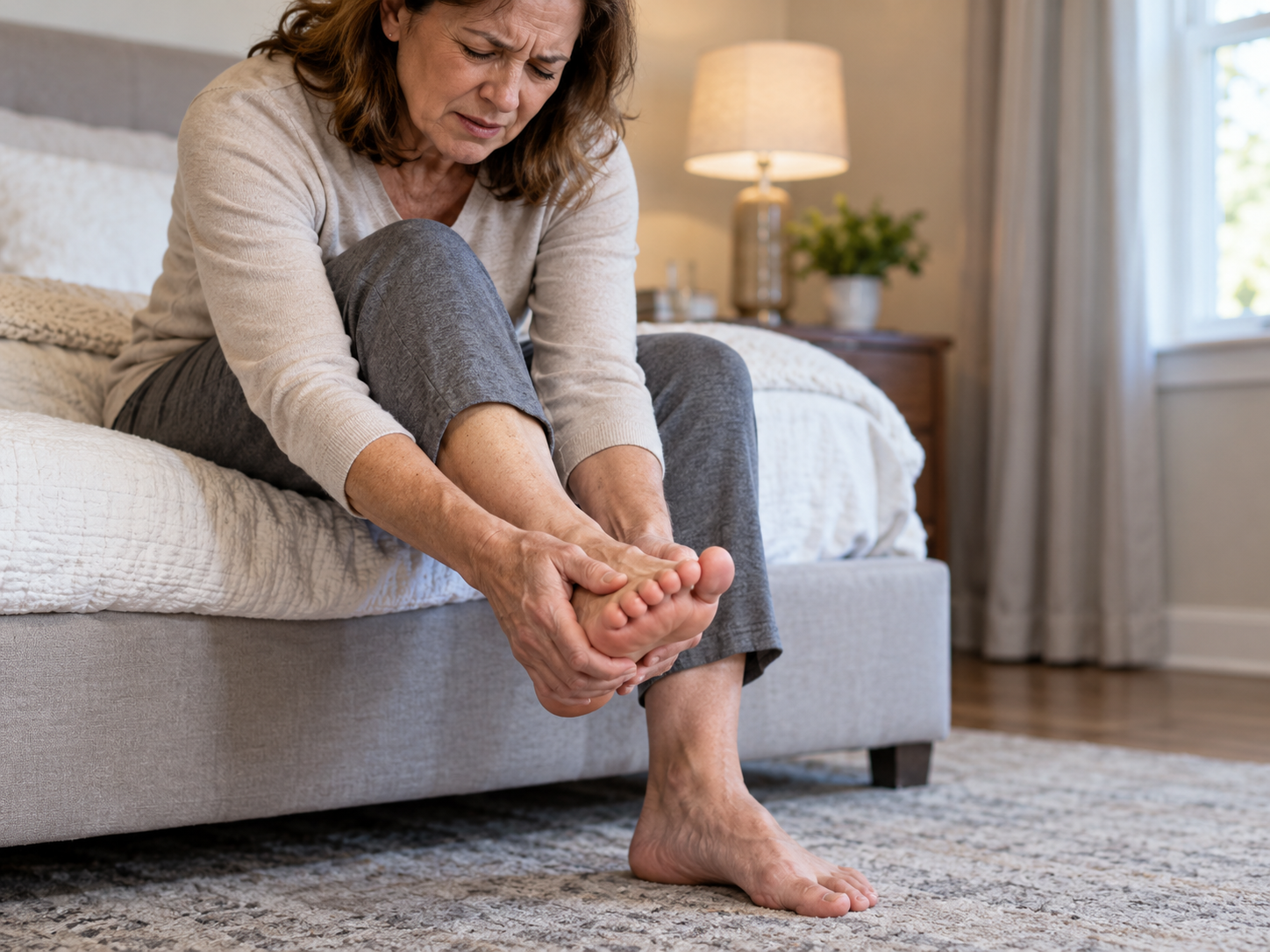
- Burning or pain in the feet, sometimes sharp
- Tingling or pins and needles
- Numbness or a reduced ability to feel touch, vibration, heat or cold
- Pain from a light touch, such as the touch of bedsheets (called allodynia)
- Symptoms that are worse at night, which can disrupt sleep
- Weakness, cramps or balance problems, which can lead to falls
Possible causes of numbness, tingling and burning feet
Diabetes is the leading cause of peripheral neuropathy in the U.S. and one of the most common causes overall. Other causes include traumatic injuries, infections, metabolic problems, inherited conditions, exposure to toxins, autoimmune diseases, kidney and liver disorders, vitamin imbalances (low B12 or too much B6), alcohol, certain medications including some cancer drugs, and slipped disks that compress nerve fibers. In some people no cause is found, which is called idiopathic neuropathy.Diabetic vs. non-diabetic neuropathy
About two thirds of people with diabetes have mild to severe nerve problems that can cause numb, tingling or burning feet. Nerve damage from diabetes usually develops over many years, some people do not notice mild damage for a long time, and the risk rises the longer you have diabetes. To prevent it, manage blood glucose, blood pressure and cholesterol.If you do not have diabetes, the cause may still be treatable. Vitamin deficiencies, a compressed nerve in the spine, medication side effects, kidney or liver problems, alcohol use and autoimmune conditions are all on the list, and blood tests are one of the ways doctors look for them.If you have diabetes and numb feet, check your feet every day for cuts, blisters or sores, because numbness can hide an injury. A sore that is not healing needs prompt medical attention.Why finding the contributing factors matters
Treatment depends on the type and location of the nerve damage. When the underlying cause is corrected, neuropathy can sometimes resolve on its own as nerves recover. For diabetic neuropathy, managing diabetes and keeping blood glucose at safe levels may help reduce or eliminate symptoms. That is why we start by looking for causes instead of only treating the symptom.How neuropathy is diagnosed
The usual tools are a medical history, physical and neurological exams, blood tests, imaging when needed, nerve conduction studies and electromyography, and in some cases a skin or nerve biopsy. These are medical tests ordered by a physician. If you have not had a workup, ask your doctor about it, and we will tell you the same.When to see a doctor
Do not wait if numbness or tingling is spreading or getting worse, if it comes on suddenly, if it comes with weakness or trouble walking, or if you have diabetes and a foot sore that is not healing.Our multi-modal approach to neuropathy at CPRC
Our neuropathy program combines several tools. Here is what each one does, and what the research does and does not show.Thermal imaging
Thermal scan imaging records skin-temperature patterns across the feet and legs. We use it as one input and to compare before and after. It does not identify the cause of neuropathy on its own, and it is not among the standard diagnostic tools listed on the NIH pages, so it does not replace a medical workup.Laser therapy
Laser therapy (photobiomodulation) is used to ease nerve pain and support tissue healing. The 2019 review concluded that low-level laser had a positive effect on painful diabetic neuropathy, and its authors describe laser as an emerging treatment. That evidence is early and comes from low-level lasers rather than Class IV devices, so we treat laser as an option to try with a clear checkpoint, not as a cure.SoftWave shockwave therapy
SoftWave therapy delivers acoustic waves to the treated area. Research on shockwave for neuropathy is still early, so we use it as a supportive option alongside other care, not as a stand-alone fix.Supportive care
Depending on your case, we may add other supportive therapies and lifestyle guidance. Quitting smoking, avoiding toxins such as alcohol, exercising, eating well and keeping a healthy weight all support healthier nerves.What a neuropathy plan may look like
- History and exam, including what you feel, when, and what makes it better or worse.
- A look at contributing factors, including any recent blood work, diabetes control, medications and vitamin levels you already have.
- A series of supportive treatments over several weeks, matched to your case.
- A reassessment partway through, so you can see whether your symptoms are changing, and a referral if the workup is incomplete.
Frequently asked questions
What does neuropathy feel like?
Most people describe pain, burning or tingling, often in the feet first. Some lose the ability to feel touch, vibration or temperature, and some feel pain from a light touch. Symptoms depend on which nerves are affected.Why do my feet burn at night?
Neuropathic pain is often worse at night. Burning feet have many possible causes, including diabetes, so it is worth getting checked rather than guessing.Is diabetic neuropathy different from other neuropathy?
It is the most common type in the U.S. and usually develops slowly over years. Managing blood glucose, blood pressure and cholesterol is central to preventing it from getting worse. Other types have other causes, which is why a workup matters.Can neuropathy be reversed?
It depends on the cause. When the underlying cause is corrected, neuropathy can sometimes resolve as nerves recover, and managing blood glucose may help reduce or eliminate diabetic neuropathy symptoms. In other cases the damage is lasting and treatment focuses on managing symptoms and preventing further harm. Be cautious of anyone who promises a cure.Where can I get neuropathy treatment near North Charleston?
Charleston Pain Relief Center is at 2294 Otranto Rd, North Charleston, SC 29406, serving North Charleston, Hanahan, Goose Creek, Ladson, Summerville, Park Circle and the wider Lowcountry. Call or text 843-604-2276.Burning, tingling or numb feet? Find out what is behind it.
Tell us what you feel, where, and what you have already tried. Our North Charleston team will text you back with a straight answer about whether we can help — and what it would involve.
Text (843) 604-2276 →or call usSources
- National Institute of Neurological Disorders and Stroke. Peripheral Neuropathy (last reviewed March 13, 2026). ninds.nih.gov
- Mayo Clinic Staff. Peripheral neuropathy: Symptoms and causes. Mayo Clinic. mayoclinic.org
- National Institute of Diabetes and Digestive and Kidney Diseases. What Is Diabetic Neuropathy? niddk.nih.gov
- Low level laser therapy for the patients with painful diabetic peripheral neuropathy – A systematic review. Diabetes Metab Syndr. 2019;13(4):2667–2670. doi:10.1016/j.dsx.2019.07.035. PubMed
Charleston Pain Relief Center · 2294 Otranto Rd, North Charleston, SC 29406 · 843-604-2276 · Last updated 3 October 2026. This article is educational and is not a substitute for individual medical advice. Do not start or stop any medication without speaking to your prescriber.