Pain Relief · North Charleston
One tap sends us a text that is already written for you. We reply with what we would look at, what it costs, and this week’s openings.
★ Your 15-minute consult is free
New patients. Medicare & Medicaid rules apply.
Prefer to talk? Call 843-604-2276
Scan it with your phone camera
The message is already written. Send it and we reply with the details.
On your phone right now? Call 843-604-2276
Chronic pain, sports injuries, and musculoskeletal conditions impact millions of people, often restricting mobility and diminishing quality of life. While surgery has long been considered the ultimate solution, modern non-surgical therapies are reshaping pain management and overall wellness. These advanced treatments provide effective alternatives that are less invasive, safer, and often allow faster recovery, making them increasingly popular among patients seeking relief without the risks of surgery.
At Charleston Pain Relief Center, we focus on state-of-the-art, non-surgical therapies designed to restore function, reduce pain, and enhance quality of life. Among the most effective treatments are shockwave therapy, which promotes tissue healing and reduces inflammation; regenerative medicine techniques, including platelet-rich plasma (PRP) and stem cell therapy, which stimulate natural repair of damaged tissues; and targeted physical rehabilitation programs tailored to individual needs. Other innovative approaches include ultrasound-guided injections, laser therapy, and non-invasive spinal decompression, all aimed at providing precise, effective pain relief while supporting long-term recovery.
These therapies not only address symptoms but also target underlying causes, helping patients regain strength, mobility, and confidence. By combining cutting-edge technology with personalized care, Charleston Pain Relief Center empowers patients to overcome pain, improve wellness, and return to the activities they love. Experience a new standard of care, where recovery is faster, safer, and more effective than ever before.
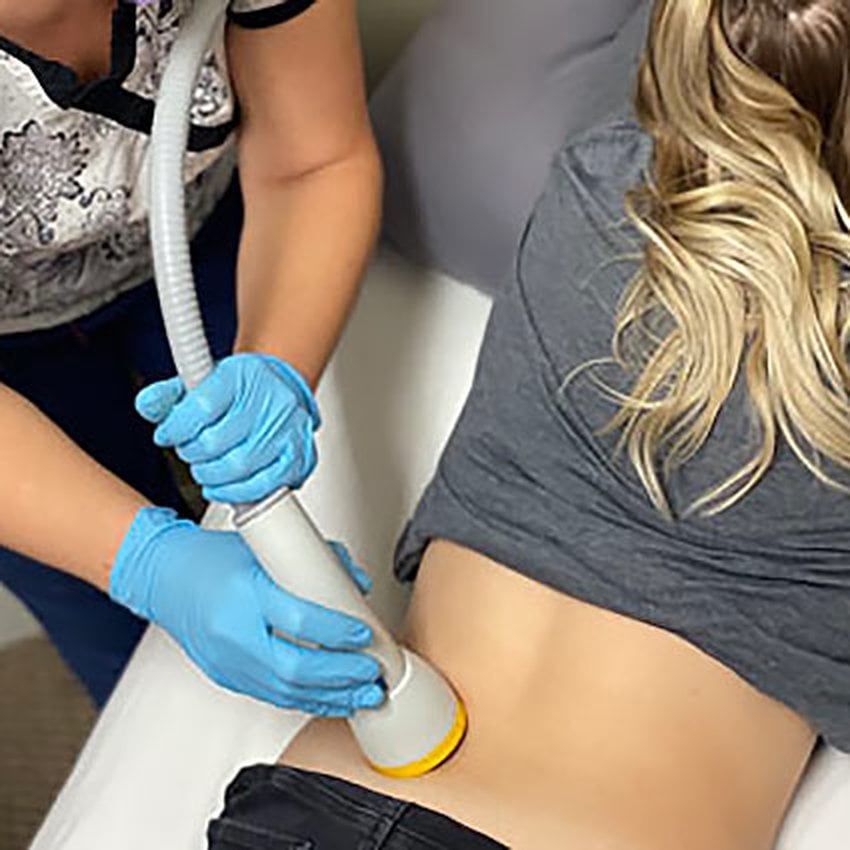
Shockwave therapy, or extracorporeal shockwave therapy (ESWT), is a non-invasive treatment that uses high-energy acoustic waves to target injured tissues. By delivering precise pulses to affected areas, it stimulates the body’s natural healing processes. The therapy enhances blood circulation, promotes cellular repair, and helps break down scar tissue and calcifications, which can reduce pain and improve mobility. Commonly used for conditions like plantar fasciitis, tendinitis, and muscle injuries, ESWT encourages faster recovery without surgery. With its ability to activate tissue regeneration and support long-term healing, shockwave therapy is increasingly recognized as an effective solution for musculoskeletal injuries.
Benefits of Shockwave Therapy:
Pain reduction: Ideal for chronic conditions such as plantar fasciitis, tendinitis, and shoulder pain.
Non-invasive: No surgery, anesthesia, or downtime required.
Improved mobility: Increases flexibility and function in affected areas.
Fast recovery: Many patients report relief after just a few sessions.
Common Applications:
Plantar fasciitis
Tennis elbow
Calcific
Achilles tendinopathy
Chronic joint pain
Shockwave therapy is especially effective for patients who have not responded to traditional treatments like medication or physical therapy. Its targeted approach makes it an excellent option for those seeking relief without surgical intervention.
Regenerative medicine is a cutting-edge field that aims to restore or replace damaged tissues and organs by harnessing the body’s natural healing abilities. Instead of just treating symptoms, it focuses on repairing the underlying damage at a cellular level. Key therapies include platelet-rich plasma (PRP) therapy, which uses concentrated platelets to stimulate tissue repair; and stem cell therapy, which introduces stem cells to support the repair of damaged tissues. These innovative treatments offer promising solutions for injuries, degenerative conditions, and chronic diseases, promoting faster recovery and improved quality of life.
PRP (platelet-rich plasma) therapy is a minimally invasive treatment that uses the patient’s own blood to promote healing. A small amount of blood is drawn and processed to concentrate the platelets, which are then injected directly into injured or damaged tissues. Platelets contain high levels of growth factors that stimulate tissue repair, enhance cell regeneration, and reduce inflammation. PRP therapy is widely used for musculoskeletal injuries such as tendon and ligament damage, joint pain, and osteoarthritis. It is also applied in sports medicine, orthopedics, and cosmetic procedures to accelerate recovery, improve function, and support natural healing.
Tendon injuries
Osteoarthritis
Ligament injuries
Muscle strains
Stem cell therapy leverages the unique ability of stem cells to develop into various types of specialized cells, making them highly effective in tissue regeneration. When introduced into injured or damaged areas, stem cells can differentiate into cartilage, tendon, or ligament cells, promoting repair and restoring function. This therapy is particularly beneficial for individuals with musculoskeletal injuries, degenerative joint conditions, and chronic tendon or ligament damage. It also shows promise in accelerating recovery after surgery or trauma. By stimulating the body’s natural healing processes, stem cell therapy offers a safe, innovative, and minimally invasive approach to repairing tissues and improving mobility and quality of life.
Degenerative joint conditions
Cartilage damage
Chronic back pain
Both Platelet-Rich Plasma (PRP) and stem cell therapies are powerful tools in regenerative medicine, offering innovative approaches to healing and tissue repair. PRP therapy involves concentrating platelets from a patient’s own blood and injecting them into injured tissues. These platelets release growth factors that stimulate cell proliferation, tissue regeneration, and collagen production. PRP is commonly used to treat sports injuries, tendonitis, osteoarthritis, and hair loss. Its main advantage is that it uses the patient’s own blood, minimizing the risk of immune reactions or disease transmission, and it is relatively simple and low-risk.
Stem cell therapy, on the other hand, uses undifferentiated cells—often harvested from bone marrow, adipose tissue, or umbilical cord blood—that have the ability to develop into specialized cell types. Stem cells can not only promote tissue repair through growth factor release but also replace damaged cells directly, making them particularly effective for conditions like cartilage degeneration, certain autoimmune diseases, and complex tissue injuries.
The key differences lie in mechanism, complexity, and application. PRP primarily enhances the body’s natural healing, while stem cells provide both repair and replacement potential. Choosing between the two depends on the condition being treated, the patient’s health status, and the desired outcomes, with both therapies showing promising results in regenerative medicine.
Non-surgical therapies are most effective when combined with guided physical therapy, creating a comprehensive approach to healing and long-term recovery. While treatments such as platelet-rich plasma (PRP) or stem cell injections help repair damaged tissues at the cellular level, physical therapy ensures that the surrounding muscles, tendons, and joints are properly strengthened and conditioned. Rehabilitation exercises improve muscle strength, increase flexibility, and restore proper joint function, which reduces the risk of re-injury.
Physical therapists use targeted exercises to address specific weaknesses or imbalances. For example, stretching routines can enhance flexibility and range of motion, while resistance training builds muscular support around injured areas. Balance and proprioception exercises improve coordination and body awareness, helping patients move more safely in daily activities and sports. Manual therapy techniques, including massage, mobilization, or trigger point release, may also be employed to relieve pain, reduce stiffness, and promote circulation to healing tissues.
Education is a key component of guided physical therapy. Patients learn proper movement patterns, posture corrections, and injury-prevention strategies to support long-term recovery. When combined with non-surgical treatments, physical therapy maximizes healing, reduces recovery time, and improves overall function. This holistic approach ensures not only immediate relief but also sustainable health, empowering patients to regain strength, confidence, and mobility.
Stretching and strengthening routines
Manual therapy
Posture and gait correction
Neuromuscular re-education
This integrated approach ensures long-term results and helps patients maintain a higher quality of life.
Charleston Pain Relief Center also offers a comprehensive range of non-surgical pain management therapies designed to help patients regain mobility, reduce discomfort, and improve their overall quality of life. These therapies are tailored to address various types of pain, whether acute or chronic, and are often used in conjunction with traditional treatments to maximize effectiveness.
One of the primary approaches includes physical therapy, which focuses on strengthening muscles, improving flexibility, and enhancing joint function. Through targeted exercises and guided movement techniques, patients can alleviate pain, prevent further injury, and restore functional independence.
In addition, Charleston Pain Relief Center provides advanced interventional procedures, such as nerve blocks and injections, which help reduce inflammation and interrupt pain signals at their source. These minimally invasive treatments are highly effective for conditions like arthritis, sciatica, and back or neck pain.
Complementary therapies, such as acupuncture, chiropractic care, and massage therapy, are also offered to support holistic healing. These approaches work to reduce muscle tension, enhance circulation, and promote natural pain relief without the need for surgery or long-term medication.
The center’s team of experienced specialists ensures that each patient receives a personalized treatment plan that addresses their unique needs, combining multiple therapies when appropriate. This integrative approach emphasizes safety, comfort, and lasting results, empowering patients to live pain-free and active lives.
Laser therapy: Reduces inflammation and promotes tissue repair using focused light energy.
Ultrasound-guided injections: Accurate delivery of anti-inflammatory or regenerative solutions to the affected area.
Radiofrequency ablation: Uses heat to reduce nerve pain for chronic conditions like back and neck pain.
These treatments can be tailored to individual needs, providing targeted relief without the risks associated with surgery.
Effective pain relief goes beyond traditional physical treatments. At Charleston Pain Relief Centre, we understand that true wellness involves addressing the whole person, not just the symptoms. That’s why our approach combines advanced medical therapies with holistic wellness strategies designed to support overall health and enhance quality of life.
Our team works closely with each patient to develop personalized plans that address the root causes of pain, while promoting long-term physical and mental well-being. We incorporate techniques such as stress management, mindfulness practices, and gentle movement therapies, which have been shown to reduce pain perception and improve functional outcomes. Nutritional guidance is also a key component of our approach, helping patients support inflammation reduction and overall bodily health through proper diet.
Additionally, we emphasize the importance of sleep, hydration, and lifestyle adjustments, empowering patients to take an active role in their healing journey. By combining medical expertise with wellness-focused strategies, we aim to not only relieve pain but also enhance energy levels, mobility, and emotional resilience.
At Charleston Pain Relief Centre, our mission is to help patients live fuller, more active lives—because true pain relief is achieved when the body, mind, and lifestyle are all nurtured together.
Nutrition counseling for anti-inflammatory diets
Stress management and mindfulness techniques
Posture and ergonomic assessments
Lifestyle coaching to enhance recovery and prevent future injuries
By addressing both the root cause of pain and lifestyle factors, patients achieve more sustainable results.
Q1: Are non-surgical therapies safe?
Yes, non-surgical therapies like shockwave therapy and regenerative medicine are minimally invasive and generally safe when administered by trained specialists.
Q2: How long does it take to see results?
Results vary depending on the therapy and condition. Some patients notice improvement after the first session, while others may require multiple treatments over several weeks.
Q3: Is insurance accepted for these therapies?
Many insurance plans cover certain non-surgical treatments. Our team can help verify your coverage and guide you through payment options.
Q4: Are the treatments painful?
Most treatments are well-tolerated. Some therapies, like shockwave or injections, may cause mild discomfort during or after the procedure, but it is usually temporary.
Q5: How do I know which therapy is right for me?
A comprehensive evaluation by our specialists ensures the selection of the most effective treatment based on your condition, medical history, and lifestyle.
Non-surgical therapies offer transformative solutions for pain relief and wellness. From shockwave therapy to regenerative medicine, these treatments provide effective, safe, and less invasive alternatives to surgery. When combined with physical therapy and holistic wellness strategies, patients experience faster recovery, reduced pain, and improved quality of life.
Charleston Pain Relief Center is dedicated to helping you regain mobility, restore function, and achieve lasting wellness. Our experienced team will guide you through every step of your treatment journey with personalized care and advanced therapies.
Take control of your health today! Schedule a free consultation to explore non-surgical therapies tailored to your needs.
📍 Address: 2294 Otranto Road, North Charleston, SC 29406
📞 Phone: Main Office: (843) 225-2550 | Free Consultation: (843) 604-2276
📧 Email: InfoLineCPRC@gmail.com
🌐 Visit our website for more information and patient resources.
Rediscover life without pain—your path to wellness starts here!