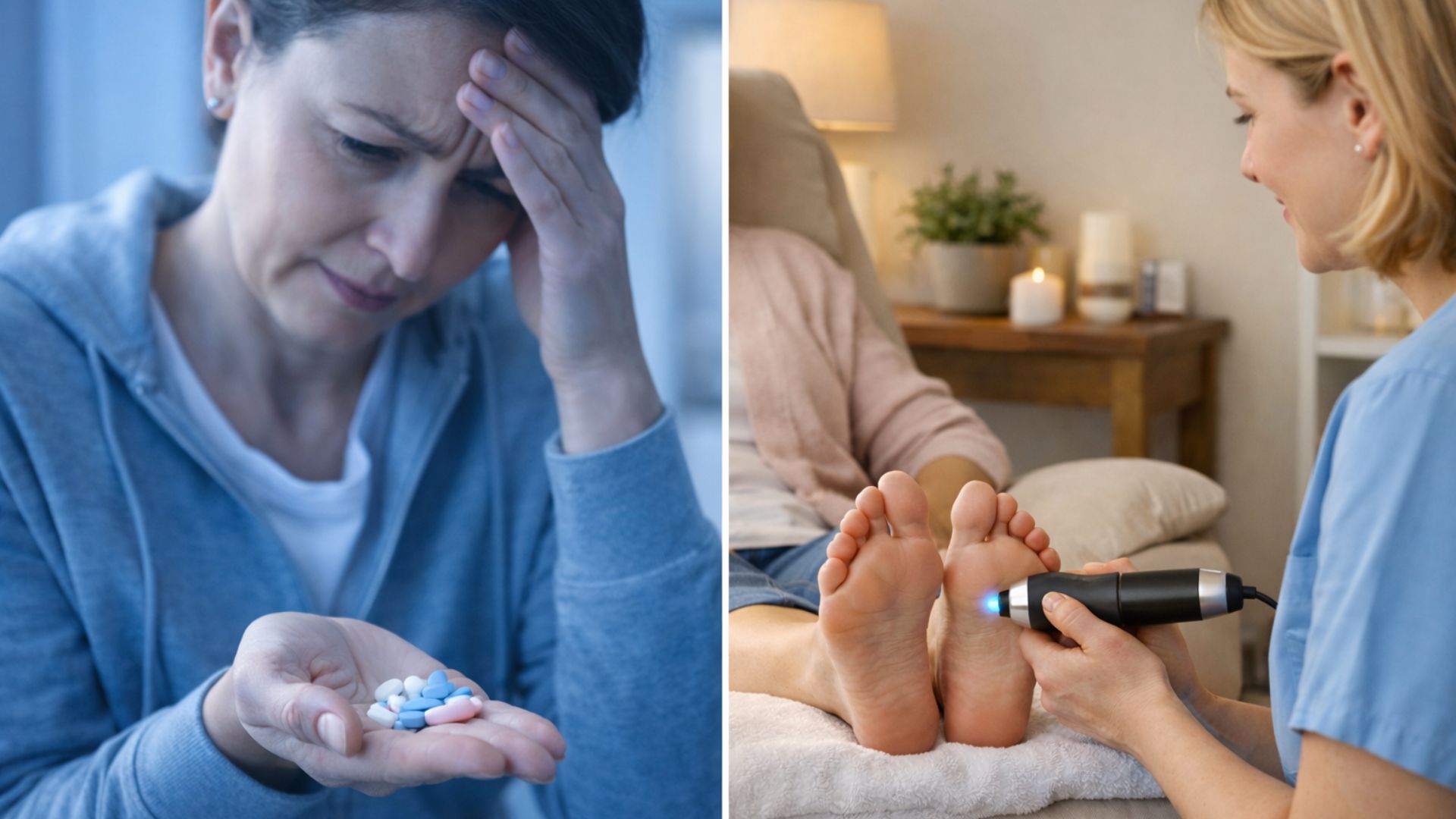
Many patients with neuropathy spend years trying medications and temporary solutions—only to find that their symptoms continue to worsen. This raises an important question: why do traditional treatments fail, and what is the neuropathy treatment that works?
Pain Relief · North Charleston
Get your pain relief plan by text
One tap sends us a text that is already written for you. We reply with what we would look at, what it costs, and this week’s openings.
★ Your 15-minute consult is free
New patients. Medicare & Medicaid rules apply.
Prefer to talk? Call 843-604-2276

Scan it with your phone camera
The message is already written. Send it and we reply with the details.
On your phone right now? Call 843-604-2276
What Is Neuropathy?
Neuropathy is nerve damage that disrupts communication between the brain and body, leading to pain, numbness, and weakness.
Why Traditional Treatments Often Fail
1. They only mask symptoms
Pain medications do not repair nerves.
2. They do not restore circulation
Poor blood flow continues nerve damage.
3. They do not stimulate healing
Damaged nerves require biological activation.
4. They ignore root causes
Such as diabetes, inflammation, or trauma.
What Actually Works Instead
Modern neuropathy care has shifted away from simply masking symptoms to actually addressing the root cause—nerve damage. Instead of temporary relief, today’s most effective approaches focus on restoring nerve function, improving circulation, and supporting the body’s natural healing processes. When combined, these therapies can deliver more meaningful and longer-lasting results.
1. Laser Therapy
Laser therapy works at the cellular level to stimulate healing in damaged nerves. By delivering targeted light energy deep into affected tissues, it helps increase cellular metabolism and promotes the repair of injured nerve fibers. It also plays a key role in reducing inflammation, which is often a major driver of pain and sensitivity. Over time, patients may notice a reduction in burning, tingling, and discomfort, along with gradual improvements in sensation and nerve responsiveness.
2. SoftWave Therapy
SoftWave Therapy enhances the body’s ability to heal itself by using acoustic wave technology to trigger a regenerative response. This treatment improves blood flow to areas where circulation may be compromised—an important factor in neuropathy. Increased circulation means more oxygen and nutrients reach damaged nerves, accelerating repair. Additionally, SoftWave helps activate growth factors and stem cell activity, which can further support tissue regeneration and pain reduction.
3. Nutritional Support
True nerve healing doesn’t just happen on the outside—it requires internal support as well. Nutritional therapy focuses on supplying the body with essential vitamins and nutrients that are critical for nerve regeneration. B vitamins, particularly B12, are vital for maintaining the protective covering of nerves, while antioxidants help combat oxidative stress that can worsen nerve damage. With the right nutritional support, the body is better equipped to repair itself and sustain long-term improvements.
4. Functional Rehabilitation
As nerve function begins to improve, it’s important to retrain the body to move correctly and safely. Functional rehabilitation focuses on restoring balance, coordination, and strength through targeted exercises and guided movement. This not only helps reduce the risk of falls but also reinforces proper nerve signaling pathways. Over time, patients regain confidence in their movements and experience better overall mobility and stability in daily life.
The Shift in Neuropathy Care
The future of neuropathy treatment is:
- Non-invasive
- Regenerative
- Root-cause focused
This approach aims to improve nerve function—not just reduce pain.
How Charleston Pain Relief Center Helps
At Charleston Pain Relief Center, patients receive advanced neuropathy care designed to address the root cause of nerve dysfunction using modern regenerative therapies.
Schedule Your Neuropathy Evaluation Today
Charleston Pain Relief Center
Phone: 843-225-2550
2294 Otranto Road
North Charleston, SC 29406
FAQ
Why do painkillers fail for neuropathy?
Because they do not repair nerve damage.
What is the most effective neuropathy treatment?
Combination regenerative therapies work best.
Can neuropathy be reversed?
Some nerve function may improve depending on severity.