Pain Relief · North Charleston
One tap sends us a text that is already written for you. We reply with what we would look at, what it costs, and this week’s openings.
★ Your 15-minute consult is free
New patients. Medicare & Medicaid rules apply.
Prefer to talk? Call 843-604-2276

Scan it with your phone camera
The message is already written. Send it and we reply with the details.
On your phone right now? Call 843-604-2276
Soft tissue injuries – whether caused by sports, accidents, repetitive strain, or daily wear and tear – can be painful, frustrating, and slow to heal. Traditional treatment methods typically involve rest, physical therapy, anti-inflammatory medications, and in some cases, surgery. While these approaches can be effective, recovery can take weeks or months, often disrupting daily activities and athletic performance.
An innovative, non-invasive treatment gaining popularity for its ability to speed up recovery is Shockwave Therapy, also known as SoftWave Tissue Regenerative Therapy (TRT). This cutting-edge treatment uses acoustic sound waves to stimulate the body’s natural healing processes at the cellular level. The waves help increase blood flow, reduce inflammation, and promote tissue regeneration, which can significantly accelerate recovery time.
Shockwave Therapy is especially effective for stubborn, chronic injuries that have not responded well to conventional care. It is commonly used for tendonitis, plantar fasciitis, muscle strains, ligament injuries, and other musculoskeletal conditions. Because it is non-invasive, patients experience minimal downtime and can often return to activity quickly.
With its ability to relieve pain, restore mobility, and enhance healing, Shockwave Therapy is becoming a preferred option for athletes, active individuals, and anyone seeking faster, more efficient recovery from soft tissue injuries.
Shockwave Therapy, also known as SoftWave Tissue Regenerative Therapy (TRT), is an advanced, FDA-cleared, non-invasive treatment designed to accelerate healing and reduce pain. It works by delivering high-energy acoustic sound waves that stimulate the body’s natural regenerative process. These waves trigger increased blood flow, promote cellular repair, and encourage the formation of new blood vessels, all of which are essential for tissue recovery.
Unlike traditional ultrasound therapy, which uses continuous sound waves to produce deep heat, Shockwave Therapy delivers focused pulses of energy that penetrate deep into injured or inflamed tissues. This focused energy not only helps break up scar tissue and calcifications but also activates stem cells in the treatment area, enhancing the body’s ability to repair itself.
Because it is non-invasive, Shockwave Therapy requires no anesthesia, has minimal side effects, and allows patients to resume normal activities quickly, making it an attractive option for many.
These sound waves:
Stimulate blood flow
Break up scar tissue and calcifications
Promote cell regeneration
Reduce inflammation
Trigger the release of growth factors that speed up healing
SoftWave TRT is particularly effective for chronic musculoskeletal conditions where other treatments may have failed.
SoftWave Tissue Regenerative Therapy (TRT) works by delivering short, high-intensity acoustic waves directly to the injured or painful area. These waves create controlled micro-trauma within the tissues, which may sound intimidating but is actually beneficial. This micro-trauma stimulates the body’s natural healing response, increasing blood flow, encouraging cellular activity, and triggering the release of growth factors that are essential for tissue repair and regeneration.
Think of it as a way to “wake up” dormant or damaged cells, reminding them to get back to work. This cellular activation helps break down scar tissue, reduce chronic inflammation, and promote the growth of new, healthy tissue. Over time, patients often experience reduced pain, improved mobility, and faster recovery.
Because SoftWave TRT is non-invasive, the treatment is performed without surgery, injections, or downtime, making it an excellent option for those seeking to speed up healing naturally and safely.
Increased Blood Circulation: One of the key benefits of SoftWave Tissue Regenerative Therapy (TRT) is its ability to improve oxygen and nutrient delivery to damaged tissues. The acoustic waves stimulate increased blood flow and the formation of new blood vessels in the treated area, a process known as neovascularization. This enhanced circulation ensures that injured tissues receive the essential oxygen and nutrients needed for repair and regeneration. As a result, healing is faster and more effective, inflammation is reduced, and pain levels decrease. This improved blood supply supports long-term recovery and helps restore normal function to the affected muscles, tendons, and ligaments.
Collagen Production Stimulation:SoftWave Tissue Regenerative Therapy (TRT) encourages the growth of new, healthy connective tissue by stimulating the body’s natural regenerative processes. The acoustic waves create controlled micro-trauma, which activates cellular repair mechanisms and signals the release of growth factors. These growth factors help promote collagen production, a critical component of strong, flexible connective tissue. Over time, this leads to the replacement of damaged or scarred tissue with healthier, more functional tissue. This process not only reduces pain and improves mobility but also strengthens the treated area, helping to prevent future injuries and supporting long-term musculoskeletal health and overall tissue resilience.
Stem Cell Activation: SoftWave Tissue Regenerative Therapy (TRT) signals your body to recruit stem cells to the injury site, jumpstarting the repair process. These stem cells enhance regeneration by developing into healthy tissue, accelerating healing, reducing inflammation, and restoring function more effectively than traditional treatments alone.
Breakdown of Fibrosis and Scar Tissue: SoftWave Tissue Regenerative Therapy (TRT) helps improve mobility and reduce pain by breaking down adhesions and scar tissue that restrict movement. This process restores flexibility, relieves tension, and allows tissues to glide smoothly, resulting in better range of motion and long-lasting pain relief for the affected area.
This makes it a powerful option for stubborn injuries that have not responded to rest, medications, or physical therapy alone.
SoftWave Tissue Regenerative Therapy (TRT) is a versatile treatment that can be used to address a wide range of soft tissue injuries and chronic pain conditions. It is commonly recommended for tendon and ligament issues such as tendonitis, tennis elbow, golfer’s elbow, rotator cuff injuries, and Achilles tendinopathy. It is also highly effective for plantar fasciitis, a leading cause of heel pain, and for breaking down painful calcifications in the shoulder.
In addition to acute injuries, SoftWave TRT is often used for chronic conditions that have not responded well to traditional therapies. This includes chronic muscle pain, joint pain, bursitis, and even non-healing wounds. By stimulating blood flow and encouraging cellular regeneration, the therapy helps restore function and reduce pain over time.
Because it is non-invasive and drug-free, SoftWave TRT is an appealing option for athletes, active individuals, and anyone looking for natural, effective pain relief and faster recovery.
Plantar fasciitis
Tennis elbow (lateral epicondylitis)
Golfer’s elbow (medial epicondylitis)
Rotator cuff tendinopathy
Achilles tendonitis
Patellar tendonitis (jumper’s knee)
Shin splints
Trigger points and myofascial pain syndrome
Chronic low back pain
Post-surgical scar tissue adhesions
Patients and clinicians alike are turning to SoftWave Tissue Regenerative Therapy (TRT) because of its numerous benefits and proven effectiveness. One of the biggest advantages is that it is completely non-invasive — there are no needles, incisions, or anesthesia required. This makes it a safe and comfortable option for patients seeking to avoid surgery or lengthy recovery times.
SoftWave TRT helps relieve pain, reduce inflammation, and improve mobility by stimulating the body’s own natural healing mechanisms. Many patients notice improvement after just a few sessions, with results continuing to build over time as tissue repair progresses.
Clinicians appreciate that SoftWave TRT can be used on a wide range of conditions, from acute sports injuries to chronic pain syndromes, offering a versatile treatment option. Its quick treatment sessions, minimal side effects, and ability to promote long-term healing make it an increasingly preferred choice in both sports medicine and general practice.
Non-invasive: No surgery, no injections, and no downtime.
Quick Sessions: Treatments typically last only 5-15 minutes.
Rapid Pain Relief: Many patients report noticeable pain reduction after the first session.
Improved Mobility: Breaking up scar tissue can restore range of motion.
Accelerated Healing: Stimulates regenerative processes for faster recovery.
Safe & Effective: FDA-cleared and backed by scientific research.
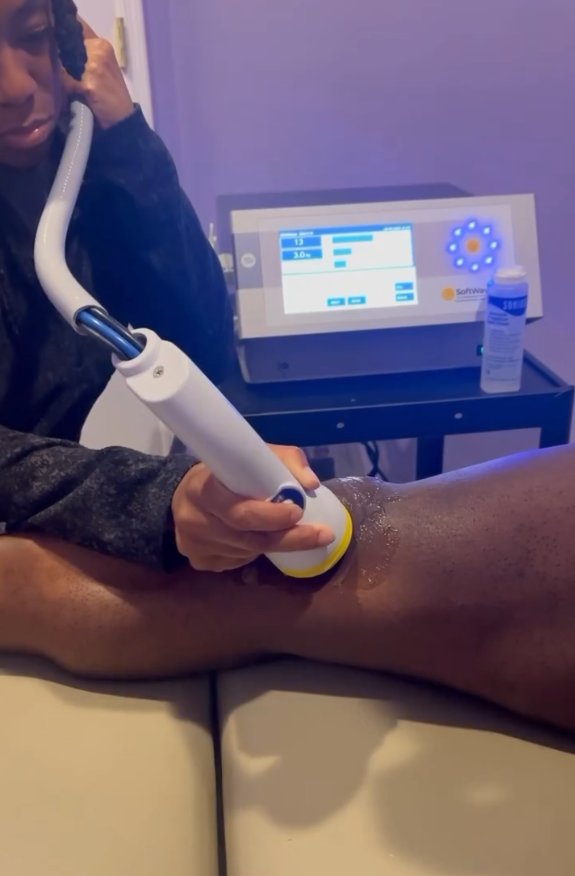
A typical SoftWave Tissue Regenerative Therapy (TRT) session is designed to be simple, safe, and comfortable for the patient. During the session, the clinician applies a special handpiece to the treatment area, which delivers high-energy acoustic waves directly into the targeted tissues. Patients may feel a tapping or pulsing sensation as the waves penetrate, but the procedure is generally well-tolerated and does not require anesthesia or pain medication.
Sessions usually last between 10 and 20 minutes, depending on the size and location of the area being treated. Because SoftWave TRT is non-invasive, there is no downtime afterward — patients can resume normal activities immediately.
Most treatment plans include a series of sessions, typically spaced over several weeks, to maximize results. Many patients report feeling relief after the first visit, with continued improvement as the therapy stimulates healing, reduces inflammation, and promotes long-term tissue regeneration.
Assessment: The clinician locates the injured area and applies a conductive gel.
Application: The SoftWave device is placed on the skin, and acoustic waves are delivered.
Sensation: Patients may feel mild tapping or tingling as energy pulses penetrate the tissue.
Post-Treatment: There is no downtime, so patients can return to normal activities immediately.
Depending on the severity of the injury, patients may need 3-6 sessions spaced over several weeks for optimal results.
SoftWave Tissue Regenerative Therapy (TRT) is generally very well tolerated, making it a safe option for most patients. Because it is non-invasive, there is no need for anesthesia, injections, or downtime. However, as with many regenerative treatments, some mild side effects can occur.
Patients may experience temporary redness, mild swelling, or slight soreness in the treated area immediately following a session. These effects are usually short-lived, lasting only a few hours to a day, and are considered a normal part of the body’s healing response. In rare cases, minor bruising may occur if the treatment area is particularly sensitive.
These side effects are typically mild enough that patients can continue with their normal daily activities right away. For most, the benefits — such as pain relief, improved mobility, and faster healing — far outweigh any temporary discomfort, making SoftWave TRT a popular and well-accepted treatment option.
Temporary soreness or swelling
Mild redness in the treated area
Tingling sensation
These effects usually subside within 24-48 hours.
Q: Is Shockwave Therapy painful? A: Most patients describe it as mildly uncomfortable rather than painful. The intensity can be adjusted to keep you comfortable.
Q: How soon will I see results? A: Many patients notice pain relief after the first session, but full benefits typically develop after several treatments.
Q: How long do results last? A: Results can be long-lasting, especially when combined with proper rehabilitation exercises and lifestyle changes.
Q: Is there any downtime after treatment? A: No, you can resume normal activities immediately after your session.
Q: Can SoftWave TRT replace surgery? A: In some cases, yes. Patients with chronic injuries who want to avoid surgery often find relief with SoftWave Therapy.
Shockwave Therapy, also known as SoftWave Tissue Regenerative Therapy (TRT), represents a breakthrough in the treatment of soft tissue injuries and chronic pain. By harnessing the power of high-energy acoustic waves, this innovative therapy stimulates the body’s natural healing processes at a cellular level. It increases blood flow, activates stem cells, and promotes tissue regeneration, helping the body repair itself more efficiently.
Unlike surgery or long-term pain medication, SoftWave TRT is non-invasive, drug-free, and comes with minimal side effects or downtime. This makes it an ideal solution for patients seeking safe, effective pain relief without the risks associated with more invasive treatments.
Whether you are an athlete recovering from overuse injuries, someone managing a stubborn chronic condition, or simply looking to improve mobility and quality of life, SoftWave TRT offers a proven way to relieve pain, accelerate healing, and help you return to an active, pain-free lifestyle.
If you are struggling with chronic pain, plantar fasciitis, tendonitis, or other soft tissue injuries, it’s time to explore a cutting-edge solution. Schedule your free consultation today with Charleston Pain Relief Center and discover how SoftWave TRT can transform your recovery journey.
📍 Address
Charleston Pain Relief Center
2294 Otranto Road
North Charleston, SC 29406
United States
📞 Contact Information
Phone (Main Office): (843) 225-2550
Free Phone Consultation Hotline: (843) 604-2276
Email: InfoLineCPRC@gmail.com
Fax: (843) 225-2590
🌐 Website: https://charlestonpainreliefcenter.com