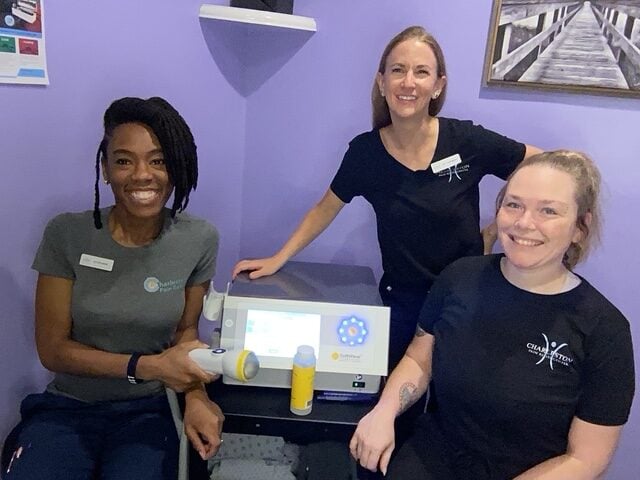
You’ve just finished your first SoftWave Tissue Regeneration Therapy session at our North Charleston office. Maybe the area feels looser already. Maybe it feels a little tender. Both are normal — and what you do over the next few days genuinely affects how well this works.
The short version
In the first 24–48 hours you may notice less pain, less swelling, and easier movement. Healing then continues for 8–12 weeks as your body repairs the tissue. Two rules matter most: don’t ice the area and avoid anti-inflammatories like Advil or ibuprofen, and take it easy for 2–3 days. Both protect the healing response your treatment just switched on.
Pain Relief · North Charleston
What is actually causing your pain?
Text yourself the answer: what we would look at, what it costs, and this week’s openings. One tap, and the message is already written for you.
★ Your first 15 minutes are free
Prefer to talk? Call 843-604-2276
Scan it with your phone camera
The message is already written. Send it and we reply with the details.
On your phone right now? Call 843-604-2276
What your treatment actually did
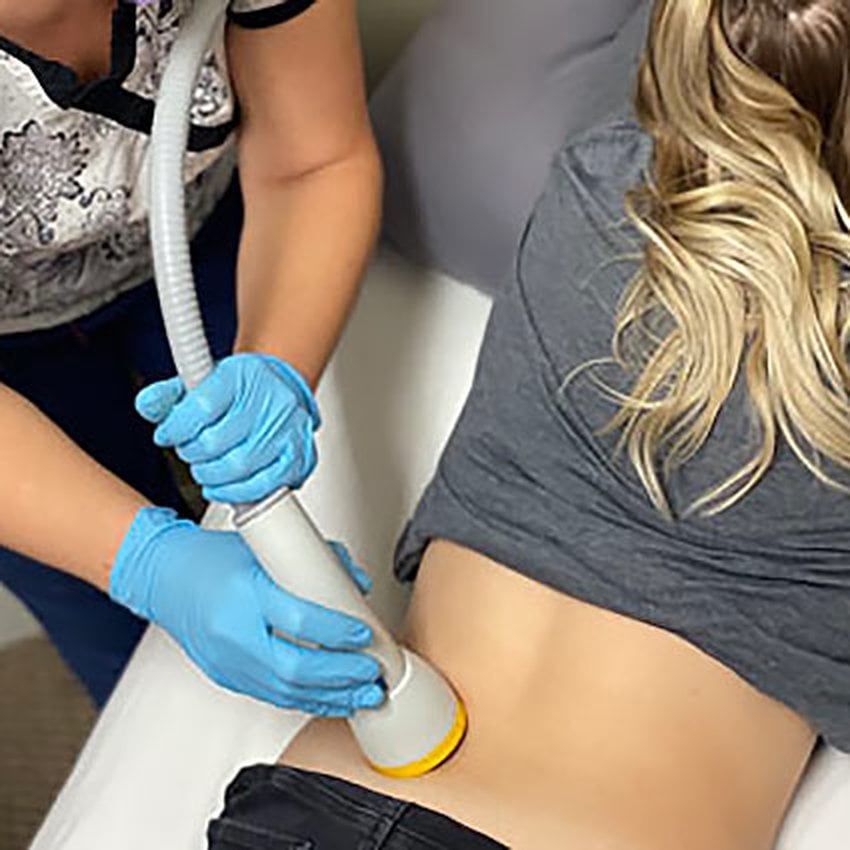
Your session targeted the area where you were feeling pain — found by locating the spots that were tender in response to the soft waves themselves.
Those waves are produced electro-hydraulically and travel at roughly 3,355 miles per hour. At a cellular level they break down scar tissue and relieve oxidative stress around the cell membranes. The effect prompts your body to respond as though there were a fresh injury — without causing any actual tissue damage.
That’s the whole idea. Chronic pain often lingers because the body has stopped actively repairing an old problem. SoftWave restarts that conversation, activating your natural healing response and reducing inflammation and pain at the site.
Research also shows the treatment can stimulate your body’s own stem cells within about 45 minutes. Those cells, alongside other healing cells, act as repair agents — resetting and regenerating tissue over the following weeks. Each additional treatment strengthens the effect.
The first 24–48 hours
Many patients notice:
- Noticeable pain relief
- Reduced swelling
- Improved range of motion
- Better circulation through the area
Some tenderness in the treated area is also common and expected. It isn’t a setback — it’s a sign your body is responding.
The part most people don’t realise: the 8–12 week window
This is the most important thing to understand about SoftWave, and it’s where expectations often go wrong.
The treatment isn’t the healing. The treatment starts the healing.
Maximum stem cell activity continues for 8–12 weeks after your session. Over that period, healing cells keep migrating to the area and repairing tissue. That’s when the most substantial benefits show up — not on the drive home.
Across a course of treatment, many patients report a 60–75% reduction in pain. Individual results vary, which is why we track your progress rather than promise a number.
The two rules that matter most
1. No ice. No Advil or ibuprofen.
This one surprises people, so it’s worth explaining. Your treatment works by deliberately triggering a controlled inflammatory healing response. Icing the area or taking anti-inflammatory medication suppresses exactly the process you just paid to switch on. It can work directly against your results.
2. Take it easy for 2–3 days.
You may feel good enough to get straight back to training. Resist it. Skip intense exercise for a couple of days and let your body put its energy into recovery. Gentle everyday movement is fine and encouraged.
If you take anti-inflammatory medication regularly, or were prescribed it for another condition, don’t stop it on your own — call us on 843-225-2550 and we’ll talk it through with you.
When to call us
Mild tenderness, temporary soreness, or some redness at the treated area are all normal. Give us a call on 843-225-2550 if you experience anything that feels unexpected, if pain is worsening rather than settling after the first few days, or if you’re simply unsure whether what you’re feeling is normal. We would always rather answer the question than have you wondering.
Supporting your body between sessions
Because SoftWave works by activating your own repair systems, patients often ask what else supports that process. A few options we may discuss with you, depending on your case:
- Red light therapy — supports cellular energy production and recovery. It pairs naturally with SoftWave because both work at the cellular level rather than masking symptoms, and it’s an easy add-on to an existing visit.
- Class IV laser therapy — frequently combined with SoftWave for stubborn or long-standing problems.
- PEMF therapy — another cellular-level therapy we use alongside shockwave in some programs.
For joints and injuries where the tissue damage is more advanced, we also offer PRP, A2M, exosome and regenerative therapies. These are delivered as regenerative medicine procedures under the guidance of our nurse practitioner, and they’re a bigger conversation than a blog post — just ask at your next visit.
We’ll never upsell you something you don’t need. If SoftWave alone is doing the job, that’s the plan.
Know someone still living with this?
Most of our patients spent years in pain before they found out there was a drug-free option. If someone you care about is there right now, one tap is all it takes.
Takes five seconds. It’s how most people find us.
Looking into SoftWave for yourself?
If you haven’t started treatment yet, here’s how it works, what it treats, and what to expect.
Frequently asked questions
Can I ice after SoftWave therapy?
No. Icing suppresses the inflammatory healing response that SoftWave is designed to trigger, so it can work against your results. Avoid ice on the treated area.
Can I take ibuprofen or Advil after shockwave therapy?
Avoid anti-inflammatory medications such as Advil or ibuprofen after treatment, as they may interfere with the healing process. If you take anti-inflammatories regularly for another condition, speak with us first on 843-225-2550 rather than stopping them yourself.
How long does SoftWave therapy take to work?
Many patients notice pain relief, reduced swelling and improved movement within the first 24–48 hours. The deeper healing continues for 8–12 weeks as stem cell activity peaks and tissue repairs. Individual results vary.
Is soreness after SoftWave therapy normal?
Yes. Mild tenderness in the treated area is common and expected — it reflects your body responding to treatment. Contact us if pain worsens rather than settles after the first few days.
Can I exercise after SoftWave therapy?
Take it easy for 2–3 days and avoid intense exercise so your body can focus on recovery. Gentle everyday movement is fine.
How does SoftWave therapy work?
SoftWave uses sound waves produced electro-hydraulically, travelling at around 3,355 miles per hour. They break down scar tissue and relieve oxidative stress around cell membranes, prompting the body to respond as if to a new injury — without causing actual tissue damage — which activates its natural healing response.
How many SoftWave sessions will I need?
It depends on the condition, how long you’ve had it, and how your body responds. Each treatment enhances the healing process, and we’ll map out a plan with you based on your progress rather than a fixed package.
Where can I get SoftWave therapy near me?
Charleston Pain Relief Center provides SoftWave Tissue Regeneration Therapy at 2294 Otranto Rd, North Charleston, SC 29406 — find us on Google Maps. We serve Hanahan, Goose Creek, Ladson, Summerville, Park Circle, Daniel Island and Mount Pleasant. Call 843-225-2550.
Questions about your recovery?
We’d rather you call than wonder — 843-225-2550
Charleston Pain Relief Center · 2294 Otranto Rd, North Charleston, SC 29406
Medically reviewed by Kayla Blann, NP · Last updated 4 August 2026. This article is general education, not medical advice, and does not replace guidance from your treating clinician. Individual results vary. Regenerative medicine procedures are delivered under the guidance of our nurse practitioner.