
PEMF Therapy in North Charleston, SC
A calm, gentle way to work toward pain relief.
Pulsed Electromagnetic Field therapy on our Neo-Flux PEMF system — gentle magnetic pulses that many patients use for pain relief and recovery support, whether it’s chronic aches, low energy, getting back on your feet after surgery or bouncing back from hard training. 15–30 minute sessions. No drugs. No needles.
- 396+ Google reviews
- 18+ years serving the Lowcountry
- Neo-Flux PEMF on-site
- Most patients combine PEMF with other therapies
Pain Relief · North Charleston
Get your pain relief plan by text
One tap sends us a text that is already written for you. We reply with what we would look at, what it costs, and this week’s openings.
★ Your 15-minute consult is free
Prefer to talk? Call 843-604-2276

Scan it with your phone camera
The message is already written. Send it and we reply with the details.
On your phone right now? Call 843-604-2276
How PEMF helps you feel better
Think of PEMF as a recharge for your body — gentle magnetic pulses that many people find calming and soothing. Here’s who it’s great for, how it works, and what your visit looks like.
Who it helps
People come to us for PEMF when they want pain relief for sore backs, achy hips and knees, and tingling or burning in the hands and feet. Many also use it for comfort while recovering after surgery, after tough workouts, and on run-down, low-energy days. If you want to move easier and feel more like yourself, PEMF may be a good fit.
How it works
Every cell in your body runs on a tiny electric charge — like a little battery. PEMF sends gentle magnetic pulses through your body, and researchers are studying how those pulses interact with that charge. Many patients tell us they feel looser, calmer and more comfortable afterward. Everyone responds differently.
What a visit is like
You relax on a comfortable padded table, fully clothed, for about 15–30 minutes. It is gentle and calm, and most people head right back into their day.
See the Neo-Flux PEMF device
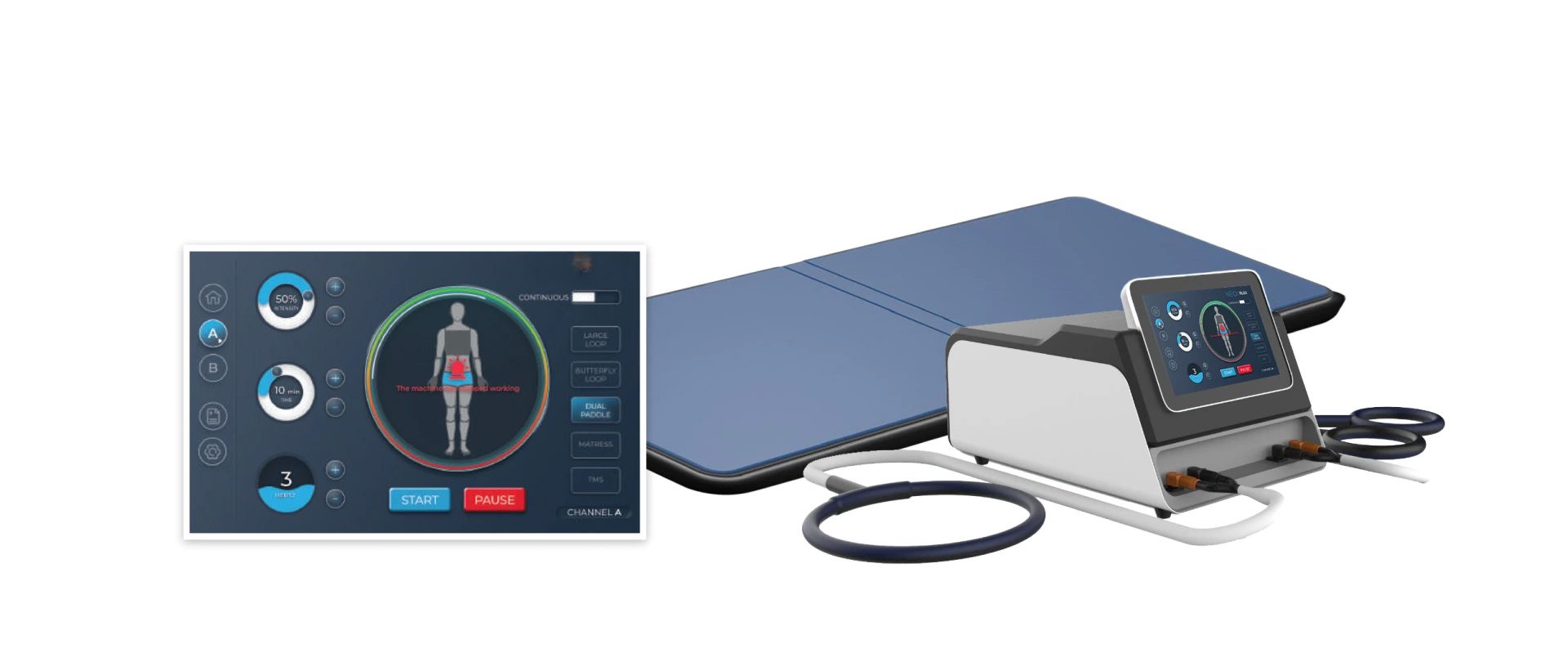
The table we use: Neo-Flux PEMF
We treat on the Neo-Flux PEMF table — a full-body system with programmable settings, so your provider can adjust each session to your comfort and goals. Want a full-body session or a focus on one joint? It does both — right here in our North Charleston clinic.
Try PEMF for yourself →Pick a date — PEMF sessions available this week
Two ways to pay for PEMF
Pay per session or join the monthly membership for unlimited PEMF access. Membership is a great value for patients who come in often.
PEMF — Per Session
Single PEMF session on the Neo-Flux table. Best for patients trying it for the first time, or for occasional recovery support.
Buy a single session Best ValuePEMF — Monthly Membership
Unlimited PEMF sessions on the Neo-Flux table for one monthly fee, a great value if you come in often. Stack with other modalities at member rates.
Start a monthly membershipPricing displayed during your free consultation. HSA/FSA cards accepted.
How PEMF therapy is thought to work
Every cell in your body runs on electrical charge. Healthy cells sit around -70 to -90 millivolts. Researchers have long studied how that charge changes when tissue is stressed or injured, and how outside magnetic pulses might interact with it. That’s the idea behind PEMF, and the science is still growing.
Pulsed magnetic fields penetrate
The Neo-Flux table generates pulsed electromagnetic fields that pass through clothing, skin, and bone — reaching the area being treated.
Researchers study the cell’s charge
Lab studies suggest the pulses may influence how charged particles move across cell membranes. Researchers are still learning what this means for people.
Cell energy is being studied
Some lab research looks at whether PEMF affects mitochondria, the cell’s power plants, and the energy (ATP) they make. These are early findings, not a promise of results.
How it may feel for you
Many patients tell us they feel looser, warmer and more comfortable after sessions, and some notice pain relief over a series of visits. Everyone responds differently, and we check in on how you’re doing as you go.
Looking for Pulse PEMF in Charleston? Here’s how Neo-Flux compares.
Pulse PEMF is the most-searched PEMF brand in the U.S. — for good reason. It’s a premium, well-marketed system used by NFL teams and high-profile clinics. But it’s not the only therapeutic-grade PEMF on the market. We chose the Neo-Flux system at Charleston Pain Relief Center for a few specific reasons. Here’s the honest side-by-side so you can make an informed call:
Neo-Flux PEMF (what we use)
- Clinic-strength pulsed output with adjustable intensity
- Full-body table format with programmable frequencies
- Popular for pain relief, recovery, relaxation and sleep support
- Lower per-session cost passed through to patients
- On-site at our North Charleston clinic — pair with chiropractic, SoftWave, laser, decompression on the same visit
- Less brand recognition; $47 a session or $497 for a month of unlimited sessions
Pulse PEMF (what you may have heard of)
- Best-known PEMF brand in the U.S.
- Premium pricing per session, often $75–$150+
- Used by major sports franchises
- Also uses pulsed electromagnetic fields
- Closest Pulse-equipped clinic in greater Charleston tends to be 30–45 minutes away
- Brand premium baked into session pricing
The plain truth: we’re not aware of head-to-head studies comparing PEMF brands, so we won’t claim one works better than another. What we can tell you is what you get here: a full-body table with programmable settings, a provider who adjusts each session to you, and a lower price. We chose Neo-Flux partly because the savings let us run combination sessions — PEMF stacked with SoftWave, laser or decompression — without breaking the bank for our patients.
Top PEMF brands compared — and where Neo-Flux fits
If you’ve been researching PEMF therapy, you’ve probably come across the major U.S. brands: Pulse PEMF, BEMER, MagnaWave, iMRS / Swiss Bionic, Curatron, and Oska Pulse. Each occupies a different price tier, intensity range, and use case. Here’s the honest landscape so you can make sense of it:
Neo-Flux PEMF
Full-body clinic table with programmable frequencies and intensity. Lower brand premium passed through to patients, which lets us stack PEMF with SoftWave, Class IV laser or Hill-DT decompression in the same visit. On-site at our North Charleston clinic.
Pulse PEMF (PulseCenters)
Premium clinical-grade tables. Best-known U.S. brand. High intensity, deep penetration, used by NFL/NBA. Per-session pricing typically $75– If you’ve been researching PEMF therapy, you’ve probably come across the major U.S. brands: Pulse PEMF, BEMER, MagnaWave, iMRS / Swiss Bionic, Curatron, and Oska Pulse. Each occupies a different price tier, intensity range, and use case. Here’s the honest landscape so you can make sense of it: Wellness-focused mid-intensity system. Widely sold for home use. Lower intensity than most clinic tables, and marketed mainly for general wellness. Originally an equine veterinary brand that crossed into human clinical use. High-power pulsed system, often used for deep muscle and joint sessions. Less common in pain clinics than Pulse. Premium home and clinical systems with sophisticated programmable waveforms. Higher learning curve. Often marketed for sleep and longevity routines. European clinical PEMF brand with a long history of bone-healing research. Often used in orthopedic and post-surgical recovery settings.Top PEMF brands compared — and where Neo-Flux fits
BEMER
MagnaWave
iMRS / Swiss Bionic Solutions
Curatron
What matters more than brand: (1) is the device therapeutic-grade gauss output, (2) is the protocol programmed to your specific condition, and (3) is the practitioner experienced in PEMF treatment planning. We score yes on all three with Neo-Flux at Charleston Pain Relief Center.
What people ask us about PEMF for
People come to us asking about PEMF for many reasons. Here are the most common, with what we can honestly say about each. PEMF often fits best as one part of a bigger plan with our other therapies:
Chronic back pain
Some trials have reported less pain and better function with PEMF for low back pain. Many patients pair it with chiropractic and decompression as part of their pain relief plan.
Visit Back Pain hubPeripheral neuropathy
Aimed at easing numbness, tingling and burning so you can get back to what you love. Part of our Charleston Neuropathy Protocol alongside Class IV laser and SoftWave.
Visit Neuropathy hubHip pain & bursitis
Many patients with outer hip soreness (trochanteric bursitis) or long-standing hip pain use PEMF as part of their pain relief plan.
See hip pain optionsKnee pain & arthritis
Studies in knee osteoarthritis have reported less pain and stiffness for some people. Many patients use PEMF as part of their knee pain relief plan.
See knee pain optionsPost-surgical recovery
Some people use PEMF for comfort while recovering after surgery or an injury. Check with your surgeon first; we work alongside their plan.
Athletic recovery
Many active people use PEMF to feel looser after hard workouts. Some book it weekly during heavy training.
Sleep & fatigue
Many patients find sessions deeply relaxing, and some tell us they sleep better and have more energy afterward. Everyone responds differently.
Bones and fractures
Some PEMF devices are FDA-cleared for specific uses, such as slow-healing bone fractures. At our clinic, PEMF is offered as a wellness and pain relief service.
Chronic inflammation
Researchers are studying how PEMF may relate to the body’s inflammation signals. We can’t promise results, but many patients with lingering aches find sessions soothing.
Wound healing
Studies have looked at PEMF added to standard wound care. Wounds should always be managed by your medical doctor; ask us whether PEMF may fit alongside that care.
Sports injuries
Soft-tissue trauma, sprains, strains. PEMF combined with SoftWave and laser is our go-to recovery stack.
See sports injury pageGeneral wellness & longevity
Many of our patients use PEMF as part of a regular wellness routine to feel relaxed, loose and ready for their day.
PEMF research highlights — what published studies have reported
PEMF has been studied for many years. Here’s a plain-English snapshot of what some studies have reported. Many were small, results varied, and none promise what PEMF will do for you:
| Condition / Area | Key Findings | Reference Type |
|---|---|---|
| Chronic low back pain | Some randomized trials reported lower pain scores and less disability at 6 weeks compared with a sham (inactive) treatment. | RCT, peer-reviewed |
| Knee osteoarthritis | Studies reported better pain and stiffness scores for some people. Evidence on any effect on cartilage is limited. | Multiple RCTs, meta-analyses |
| Bone non-union fractures | Some PEMF bone growth stimulators are FDA-cleared for fractures that have not healed on their own. Studies of those specific devices reported higher healing rates. | FDA clearance + clinical evidence |
| Post-operative bone healing | Some studies reported less pain and shorter recovery after orthopedic surgery. | RCT, peer-reviewed |
| Peripheral neuropathy | Some trials in diabetic neuropathy reported less pain for some people; other trials found little difference from sham. | Multiple clinical trials |
| Depression & anxiety | Small trials reported better mood scores when PEMF was added to standard treatment. PEMF is not a substitute for mental health care. | RCT, peer-reviewed |
| Sleep quality | Some study participants reported falling asleep more easily and sleeping more soundly. | Observational + small trials |
| Wound healing | Some trials reported faster wound closure when PEMF was added to standard wound care. | Clinical trials |
During your initial consultation we’ll go over which research evidence is most relevant to your specific situation — and we’ll tell you straight if PEMF isn’t the right tool for your case.
What to expect during a PEMF session
15–30 minutes
Most sessions run 20 minutes. You lay fully clothed on the Neo-Flux table — most patients describe it as deeply relaxing. Many fall asleep.
4–12 sessions typical
Many people with recent aches try 4–6 sessions; longer-standing issues often get 8–12. Everyone responds differently. We re-evaluate every 4 visits.
Often combined with our other therapies
PEMF stacks beautifully with SoftWave, Class IV laser, chiropractic, decompression and red light. Many patients get multiple modalities on the same visit.
No drugs, no downtime
You can drive, work and exercise the same day. Some patients feel slightly tired after — let us know if you do and we’ll adjust your session.
Who’s not a candidate
PEMF is gentle, and most people tolerate it well. We won’t recommend it if any of these apply:
- Pacemaker, defibrillator or other implanted electronic medical device
- Cochlear implant or other electromagnetic implants
- Pregnancy
- Active malignancy
- Insulin pump (relative — we evaluate case-by-case)
- Recent organ transplant on immunosuppressants
If any apply, we’ll tell you on the phone before you book — and we’ll suggest a more appropriate therapy if one fits your case.
What our 396+ patients are saying
PEMF therapy across greater Charleston
Our Neo-Flux PEMF table sits at our North Charleston clinic — central to the entire Lowcountry.
Also serving Daniel Island, Ladson and Johns Island. Call (843) 604-2276 if you don’t see your city.
PEMF works best paired with other therapies
Many patients use PEMF as one part of a bigger pain relief plan. Here’s how it often fits with our other therapies:
Hill-DT spinal decompression
Many disc patients add a PEMF session before or after decompression as a relaxing part of their visit.
See spinal decompressionSoftWave shockwave therapy
Many patients pair SoftWave and PEMF on the same visit. It’s a common combo for people looking for relief from long-standing tendon pain.
See SoftWave hubClass IV laser therapy
Laser focuses on one area, while PEMF can cover the whole body. Many neuropathy patients use both as part of a plan aimed at easing numbness, tingling and burning.
See laser therapyRegenerative medicine
If you’re getting biologic injections (PRP, stem cell, A2M), some patients add PEMF sessions in the days before and after as a relaxing part of their recovery routine. Ask your provider whether it fits your plan.
See regen therapyTwo ways to start
Free Phone Consultation
Tell us where it hurts and what you’ve tried. We’ll tell you straight whether PEMF is the right next step — no clinic visit required.
Book a phone consult In-ClinicFree In-Clinic Consultation
15-minute in-person evaluation. We’ll examine, listen, and recommend the right therapy stack — PEMF on its own, or combined with SoftWave, laser, decompression or chiropractic.
Book in-clinic consultPEMF therapy, answered
What does PEMF stand for?
PEMF stands for Pulsed Electromagnetic Field therapy. It uses gentle pulsed magnetic fields, and many people use it for pain relief, relaxation and recovery support.
Is the Neo-Flux PEMF system the same as Pulse PEMF?
No. They’re different brands that both use pulsed electromagnetic fields. Pulse PEMF is the best-known U.S. brand and a premium-priced system. The Neo-Flux table is a full-body system with programmable frequencies and intensity. Pulse charges more for the brand premium; we passed the savings to our patients and use that cost difference to stack PEMF with SoftWave, laser or decompression on the same visit.
How does Neo-Flux PEMF compare to BEMER, MagnaWave, iMRS or Curatron?
Pulse PEMF, BEMER, MagnaWave, iMRS / Swiss Bionic, Curatron and Oska Pulse are the most-searched PEMF brands in the U.S. Each occupies a different price and intensity tier. Pulse and Neo-Flux are both full-body clinic tables. BEMER and Oska are wellness-tier devices with lower output. MagnaWave and Curatron are clinical brands often used in orthopedic and equine-derived settings. iMRS focuses on programmable home and clinical systems. We chose Neo-Flux for its full-body design and lower per-session cost, which we pass on to you.
How long is a PEMF session?
Most sessions run 15 to 30 minutes. You stay fully clothed on the Neo-Flux table. Most patients find it deeply relaxing — many fall asleep.
How many sessions will I need?
Many people with recent aches try 4 to 6 sessions; longer-standing issues often get 8 to 12. Everyone responds differently. We re-evaluate every 4 visits and adjust the protocol based on your response.
Does PEMF therapy hurt?
No. You may feel a gentle pulsing sensation, but it’s not painful. Most patients describe the experience as relaxing. The intensity is fully programmable and we adjust to your comfort level.
Who shouldn’t have PEMF?
PEMF is contraindicated for patients with pacemakers, defibrillators, cochlear implants, or other electromagnetic implants. Also avoided during pregnancy, with active malignancy, recent organ transplants on immunosuppressants, and case-by-case for insulin pumps.
Is PEMF FDA-cleared?
Some PEMF devices are FDA-cleared for specific uses, such as slow-healing bone fractures. At our clinic, PEMF is offered as a wellness and pain relief service.
Will my insurance cover PEMF?
PEMF is typically not covered by insurance and is paid out of pocket. We offer transparent package pricing, accept HSA and FSA cards, and offer payment plans. Most patients find it significantly more affordable than the Pulse-equipped clinics 30 to 45 minutes away.
Can PEMF be combined with my other treatments?
Yes — PEMF combines exceptionally well with chiropractic, SoftWave shockwave, Class IV laser, spinal decompression, red light therapy and regenerative medicine. We routinely run multiple modalities on the same visit for chronic and recovery patients.
Where are you located?
Charleston Pain Relief Center is at 2294 Otranto Rd, North Charleston, SC 29406 — central to Charleston, Mt Pleasant, West Ashley, Summerville, Goose Creek, Hanahan and Ladson.
Ready to see if PEMF fits your pain relief plan?
15-minute evaluation. We’ll look at your case and tell you straight whether PEMF — alone or combined with our other therapies — is the right call for you.
Pairs Well With
PEMF therapy pairs perfectly as your warm-up and recovery stack with the other CPRC therapies:
- EBOO Ozone Therapy at CPRC — the full wellness day; PEMF is the 15-min on-ramp before.
- Ozone Therapy in North Charleston — standard, high-dose, and EBOO compared.
- Red Light Therapy in North Charleston — 10-min full-body bed, post-treatment reset.
- Chiropractor in North Charleston — adjustments, decompression, SoftWave.
- Lymphatic Massage in North Charleston — BOA Max 2 drainage; popular wellness-day add-on.
How Much Does PEMF Therapy Cost in North Charleston?
At Charleston Pain Relief Center in North Charleston, SC, a single PEMF therapy session is $47, or get unlimited PEMF for 30 days with the $497 monthly membership. Book and pay online; HSA/FSA accepted.
No insurance required — HSA/FSA accepted. Same-week appointments. Call 843-604-2276.
PEMF, short for Pulsed Electromagnetic Field therapy, uses gentle electromagnetic pulses to support circulation, cellular energy, and recovery in painful or inflamed tissue. At Charleston Pain Relief Center in North Charleston, SC, it is a drug-free, non-surgical option used on its own or alongside other therapies. Most patients start with a candidacy screening.
By the numbers: About 8.5% of U.S. adults have high-impact chronic pain that limits everyday activities. CDC NCHS Nearly 1 in 4 U.S. adults (24.3%) had chronic pain in 2023. CDC NCHS
PEMF (pulsed electromagnetic field) therapy
We offer PEMF therapy as a recovery and wellness modality.
What the research says: a 2019 analysis of randomized trials found PEMF improved physical function in people with knee osteoarthritis, with mixed findings on pain. Journal of Rehabilitation Medicine, 2019
Offered as a wellness and recovery service, not FDA-cleared to treat a specific condition. Results vary.
PEMF Therapy in North Charleston — Gentle Sessions for Pain Relief.
Pulsed Electromagnetic Field therapy delivers low-frequency magnetic pulses in a relaxing session many patients use for pain relief and recovery. CPRC runs professional-grade Neo-Flux protocols — 20 minutes, fully clothed, zero downtime, and stackable with everything else we do.
Five Ways We Use PEMF at CPRC
Whole-Body Recharge
The baseline 20-minute mat session — full-body and relaxing. Most patients feel calmer and sleep better the same night.
Pain & Joint Protocol
Targeted local applicators over the spine, knee, shoulder, or hip — pairs well with chiropractic care.
Recovery & Post-Op
Post-workout, post-surgical, or post-EBOO recovery. A relaxing add-on many athletes use between hard workouts.
Sleep + Vagal Tone
Lower-frequency protocols downshift sympathetic overdrive. Used for anxious sleepers, burnout, and stress recovery.
Bone Health Questions
Ask us what research says about PEMF and bone health. Coordinated with your physician.
Why CPRC for PEMF
- Medical oversight. Kayla Blann, FNP-C reviews protocols so we can match intensity and duration to your case — and clear contraindications honestly (pacemakers, pregnancy, active malignancy without clearance).
- Stacked the right way. PEMF pairs especially well with chiropractic (calms tissue before adjustment), red light (mitochondrial layer), EBOO (oxidative + electromagnetic), and lymphatic compression.
- Professional-grade equipment. Not a $200 home mat. Our Neo-Flux protocols deliver clinical intensities so 20 minutes here is worth hours of consumer-device use.
- Honest on insurance. PEMF is almost always cash-pay self-care. We tell you up front — no surprise billing.
Stack Your PEMF Care
Red Light Therapy
PEMF and red light pair well in one visit. The combo is greater than the sum of the parts.
Learn Red Light →EBOO Therapy
Clean the blood with EBOO, recharge the cell with PEMF. Same-day stacking is allowed.
Learn EBOO →Lymphatic Compression
Pre-session compression moves stagnant lymph so PEMF reaches recharged tissue.
Learn Lymphatic →Chiropractic
10 minutes of PEMF over a flared joint before adjustment makes the adjustment hold longer.
Learn Chiropractic →Medical Weight Loss
PEMF supports recovery and sleep through the metabolic reset of our weight-loss program.
Learn Weight Loss →Try PEMF this week.
Free 15-minute consult with Kayla Blann, FNP-C — we'll map your protocol, the right stack, and your honest cost up front.