FDA-CLEARED · DRUG-FREE · SURGERY-FREE

Non-Surgical Spinal Decompression in North Charleston, SC

Pull pressure off the disc. Let it heal itself.

Computer-controlled traction therapy that creates negative pressure inside an injured disc — pulling herniated and bulged material back in, rehydrating the tissue, and giving compressed nerves room to breathe. No drugs. No injections. No surgery.

377 verified five-star reviews 18+ years serving Lowcountry decompression table Most patients avoid surgery
Book In-Clinic Appointment

Pick a date — spinal decompression evaluations available this week

Same-Week Appointments 377+ 5-Star Reviews 18+ Years Experience No Surgery, No Drugs North Charleston, SC

How spinal decompression actually works

It’s not the same as a traction table at a gym. The decompression unit we use measures the resistance of your muscles in real time and adjusts the pull so you never tense up — that’s the difference between gentle, healing decompression and forcing the spine.

Map the spine

We isolate the exact disc level causing the pain — L4-L5, L5-S1, C5-C6, wherever — and program the table to that segment.

Pull pressure out

The table applies precise, computer-controlled axial traction. Pressure inside the disc drops below zero, creating a vacuum.

The disc retracts

Negative pressure pulls bulged or herniated disc material back in. Water, oxygen and nutrients flow into the disc, rehydrating it.

Pain signals quiet

With pressure off the nerve and the disc healing, sciatic, lumbar and cervical pain signals fade. Most patients feel relief inside 1–3 visits.

The Equipment

Built around the FDA-cleared Hill-DT decompression table

Not all decompression tables are equal. The Hill-DT system is the , computer-controlled table we use at every Charleston Pain Relief Center decompression session. It measures the resistance of your back muscles in real time and modulates the pull so your body never tenses up — that’s the difference between a healing decompression and the basic traction you’d get on a generic table.

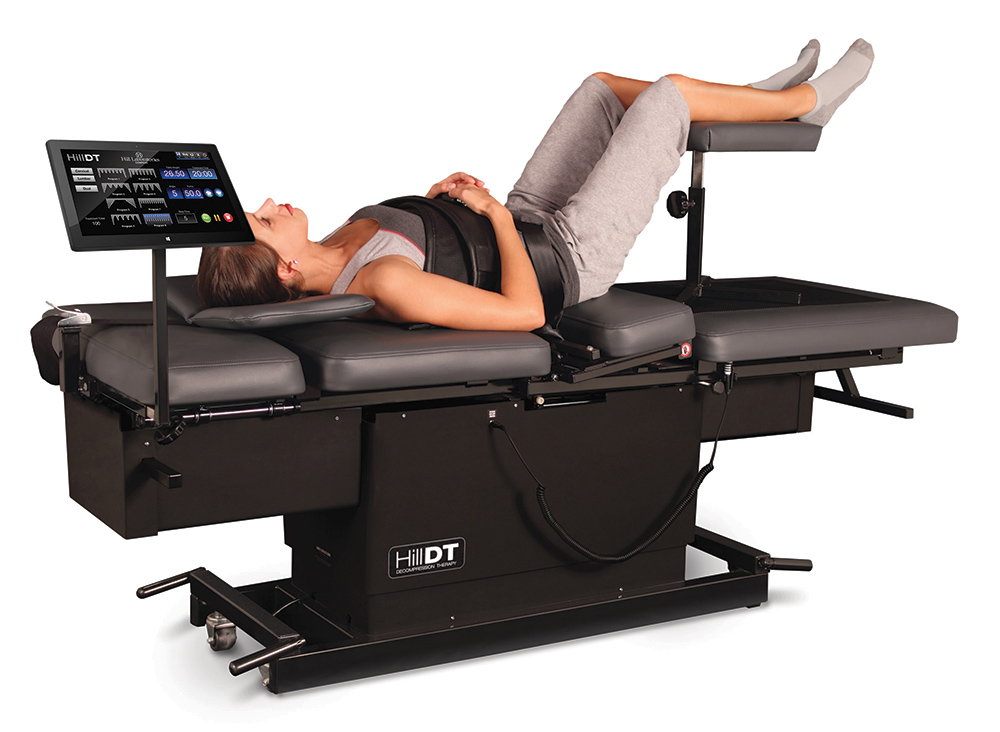
Patient receiving Hill-DT non-surgical spinal decompression therapy at Charleston Pain Relief Center in North Charleston, SC
A patient on the FDA-cleared Hill-DT decompression table during a 20-minute session at our North Charleston clinic.
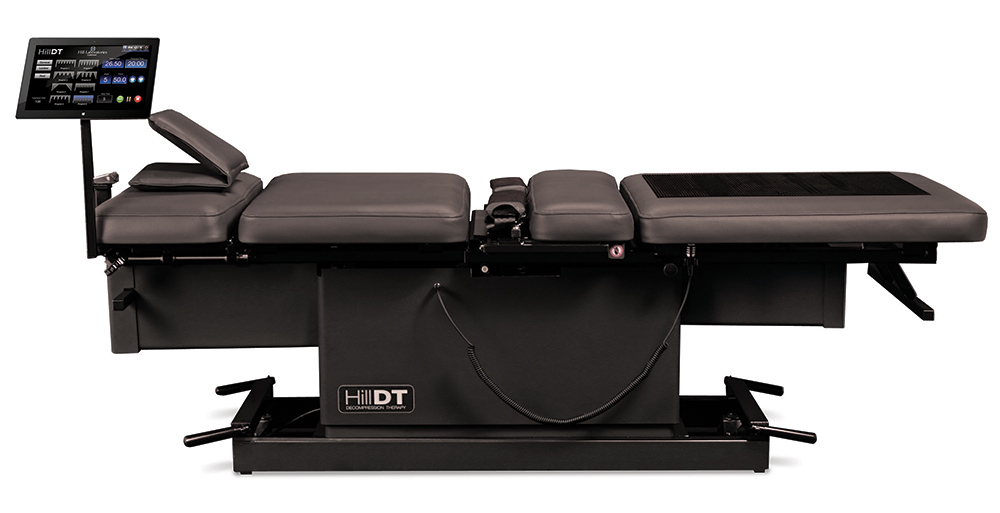
Hill-DT computer-controlled spinal decompression table at Charleston Pain Relief Center
The FDA-cleared Hill-DT decompression table — , computer-controlled traction.

Real-time muscle resistance sensing

The Hill-DT continuously measures how your back is reacting and modulates the pull so guarding muscles never trigger. That’s why patients describe it as “relaxing” instead of “stretching.”

Lumbar & cervical settings

The same Hill-DT table treats both lumbar (low back) and cervical (neck) disc problems with different harness configurations. One device, full-spine coverage.

Programmable per disc level

We dial the table to the exact disc segment causing your pain — L4-L5, L5-S1, C5-C6, wherever — so the negative pressure is targeted, not generic.

What to expect on the table

First visit is mostly evaluation — exam, imaging review, your goals. Treatment sessions are short and easy.

20–30 minutes per session

Most of that is the table doing its job. You’re fully clothed, harnessed at the chest and pelvis, and you can read or rest.

Most plans run 6–12 weeks

Typically 3 visits per week tapering down. Total sessions depend on chronicity — recent injuries often resolve in 12 sessions; long-standing herniations need 20–24.

Combined with laser & SoftWave

We layer Class IV laser and SoftWave on the same visit to drive down inflammation and accelerate disc rehydration. One copay, three therapies.

Most patients describe it as relaxing

Many fall asleep on the table. The traction is gentle — you should never feel pinching, sharp pain or muscle spasm.

Who’s not a candidate

We won’t recommend decompression if any of these apply — straight talk so you don’t waste a visit:

  • Pregnancy
  • Spinal fusion hardware at the level we’d be treating
  • Severe osteoporosis
  • Active spinal cancer or fracture
  • Abdominal aortic aneurysm
  • Severe nerve damage requiring immediate surgical attention

If you have any of the above, we’ll tell you on the phone — before you book — and refer you to a more appropriate specialist.

Spinal decompression vs spine surgery

Surgery should be the last resort, not the first. Here’s the honest comparison so you can decide what fits your situation:

Non-surgical decompression

  • , no anesthesia
  • No incisions, no scar tissue
  • No hospital stay, no downtime
  • Drives the disc to heal itself
  • Affordable — fraction of surgery cost
  • If it doesn’t work, surgery is still on the table
  • Most insurance covers part of the visits

Spinal surgery

  • General anesthesia required
  • Scar tissue can cause new pain later
  • 4–12 weeks out of work, longer for fusion
  • Removes disc material — doesn’t repair it
  • $30k–$100k+ even with insurance
  • Roughly 20% of patients need a follow-up surgery within 5 years
  • Permanent — can’t be undone if results disappoint

If you’ve already been told you “need surgery,” it’s worth a 15-minute call before you commit. We’ve helped many Charleston patients avoid the OR entirely.

Brand Comparison

Top spinal decompression tables compared — and where Hill-DT fits

If you’ve been researching non-surgical spinal decompression in Charleston, you’ve probably seen the major brand names: DRX 9000, Triton DTS, Vax-D, Saunders Cervical Traction, Chattanooga Triton, and Spina. Each is a different tier of equipment, with different mechanisms and clinical reputations. Here’s the honest landscape:

What we use

FDA-cleared Hill-DT decompression table

Computer-controlled lumbar AND cervical decompression with real-time muscle resistance sensing. Same therapeutic-grade output as DRX 9000 at lower per-session cost — which lets us combine decompression with SoftWave, Class IV laser and PEMF in the same visit.

DRX 9000

One of the most marketed and well-known U.S. decompression systems. Computer-controlled, lumbar decompression. Premium pricing per session in most clinics. Comparable mechanism to Hill-DT.

Triton DTS (Chattanooga)

Common in physical therapy clinics. Solid mid-tier decompression with both lumbar and cervical settings. Less aggressive force modulation than Hill-DT or DRX 9000.

Vax-D

One of the original decompression brands, dating to the 1990s. Required active patient grip during therapy — newer tables (Hill-DT, DRX) eliminated that requirement. Older tech, still in some clinics.

Saunders Cervical Traction

Home cervical traction device — useful for mild neck symptoms but not therapeutic-grade clinical decompression. Often sold to patients alongside in-clinic care.

Chattanooga Triton

The Chattanooga group’s clinical decompression line — widely used in chiropractic and PT settings. Clinical-grade, slightly different waveform programming than Hill-DT.

Spina & newer entrants

Several newer brands in the decompression space. Spec sheets vary — some match clinical-grade output, others are entry-level traction repackaged as decompression.

What matters more than the table brand: (1) is the device computer-controlled with real-time muscle resistance sensing, (2) is the protocol programmed to your specific disc level, and (3) is the clinic combining decompression with the right adjunct therapies. Hill-DT scores yes on all three at Charleston Pain Relief Center.

Spinal decompression patients across greater Charleston

Our decompression table sits at our North Charleston clinic — central to the entire Lowcountry. Most patients drive 15 minutes or less.

Also serving Mt Pleasant, Daniel Island, Johns Island, Moncks Corner and James Island. Call (843) 604-2276 if you don’t see your city.

Decompression is one piece of the puzzle

Most patients get the best results when decompression is paired with related care. If you’re here for back pain, sciatica or chiropractic adjustments specifically, start with these:

Real Charleston patients. Real results.

Patient stories from people who came in with herniated discs, sciatica and chronic back pain — and got their lives back without surgery.

Back Pain Testimonial — Our patient discusses his work-related back pain and how treatment at our clinic relieved his pain and improved his sleep.
Spinal Decompression Testimonial — Our patient describes how spinal decompression therapy relieved her neck and lower back pain.

What our 377+ patients are saying

On-Site Diagnostic Imaging · $50 Cash

Need an X-ray? $50 cash, on-site, same-day.

Most disc cases benefit from an X-ray before non-surgical decompression — to confirm the level, rule out contraindications and personalize the protocol. Most patients pay

Spinal decompression, answered

Is spinal decompression ?

Yes. Modern computer-controlled spinal decompression tables are as Class II medical devices. They differ from basic traction tables (which can trigger muscle guarding and worsen pain) because the computer constantly measures resistance and adjusts the pull in real time.

How is this different from traction or inversion tables?

Traction tables apply a constant pull, which causes the back muscles to tense up and resist — defeating the purpose. Inversion tables use gravity, which is uneven and uncontrolled. decompression isolates the specific disc level, modulates the pull, and creates true negative pressure inside the disc. Different mechanism, different results.

Will decompression actually heal my herniated disc, or just mask the pain?

It treats the cause. The negative pressure pulls bulged or herniated disc material back in and rehydrates the disc tissue with water, oxygen and nutrients. Pain reduction is a side effect of the disc actually healing — not a numbing of symptoms.

How many sessions will I need?

Most plans run 18–24 sessions over 6–12 weeks, tapering frequency as you improve. Recent disc injuries (under 6 months old) often resolve in 12 sessions. Chronic herniations and degenerative cases need the full course. We re-evaluate every 6 visits and adjust.

Does decompression hurt?

No. Most patients describe it as gentle and relaxing — many fall asleep on the table. You stay fully clothed, harnessed at the chest and pelvis, and the table does the work. If you ever feel sharp pain, the table releases pressure immediately.

Can I do decompression if I already had spinal surgery?

Often, yes — once the surgical site has fully healed (usually 6 months minimum). Failed back surgery syndrome is one of the cases where gentle decompression can help when nothing else has. We’ll review your op report and imaging before recommending it.

Will my insurance cover spinal decompression?

Some PPO and HMO plans cover a portion of decompression visits, especially when paired with chiropractic adjustments under the same care plan. We verify your benefits before your first visit so you know exactly what’s covered and what isn’t.

How is this different from chiropractic adjustments?

Chiropractic adjustments restore joint motion using hands-on, high-velocity moves. Spinal decompression uses a table to slowly pull the disc itself open — different mechanism, different goal. Many patients benefit from both: adjustments to free the joints, decompression to heal the disc.

How does Hill-DT compare to DRX 9000, Triton DTS or Vax-D?

DRX 9000, Triton DTS (Chattanooga), Vax-D, Saunders Cervical Traction, Chattanooga Triton and Spina are the most-searched spinal decompression brands. Hill-DT and DRX 9000 are the two most clinically equivalent in mechanism — both are computer-controlled, , with real-time resistance sensing. Triton DTS and Chattanooga Triton are common in PT clinics with similar but slightly less aggressive modulation. Vax-D is older tech from the 1990s. Saunders is a home cervical traction device — not therapeutic-grade clinical decompression. Hill-DT delivers DRX 9000-level clinical effect at a price point that lets us combine decompression with SoftWave, laser and PEMF in the same visit.

Where are you located?

Charleston Pain Relief Center is at 2294 Otranto Rd, North Charleston, SC 29406 — central to Charleston, Mt Pleasant, West Ashley, Summerville, Goose Creek, Hanahan and Ladson. Most patients drive 15 minutes or less.

Before you accept “you’ll need surgery” — try this first.

Bring your imaging or just your story. We’ll spend 15 minutes telling you straight whether spinal decompression is the right call for your specific case.