
Non-Surgical Spinal Decompression in North Charleston, SC
Take pressure off your discs. Get back to moving comfortably.Spinal decompression is a gentle, controlled stretch on our Hill DT table that takes pressure off your discs, so your back and legs can settle down and you can get moving again. Your consultation is free and your first session is $49.
From bent over at the stove to dancing again
Miss Sherry works full-time and loves time with her husband, daughter and two grandkids. Then one morning her back and leg stopped her in her tracks. Here is her story, in three scenes.
- 1The morning it started. She could not stand at the stove to cook dinner, so her husband took over the grocery shopping.
- 2A gentle plan. Stretching, heat and adjustments, then spinal decompression on our Hill-DT table. In her words, the decompression table “made a world of difference.”
- 3Today. A friend was shocked to see her walking without her cane. Now she comes in every two weeks to keep feeling great.
“I feel 100% better. No doubt about it.”
“You all treat your patients like family.”
Real CPRC patient. Individual results vary.
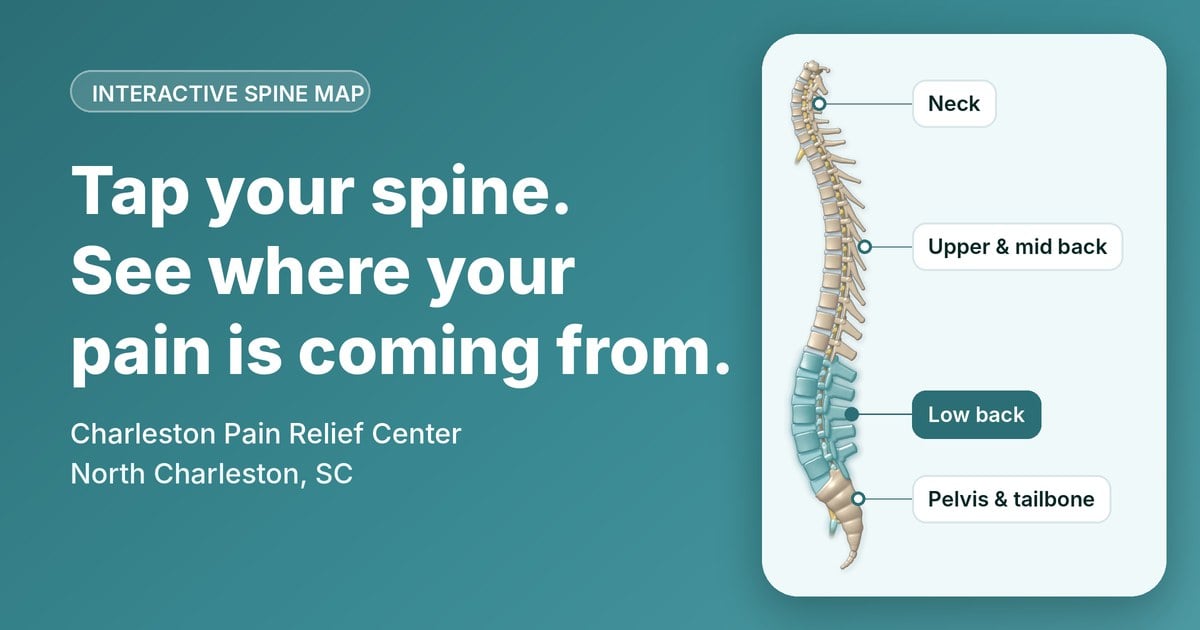
Hill-DT Spinal Decompression · North Charleston
Claim your free spinal decompression evaluation
Find out if the Hill-DT table is right for your back. We text you this month’s pricing and this week’s openings, so you get the answer without a phone call.
★ Your consultation is free
Prefer to talk? Call 843-604-2276
Non-surgical spinal decompression (also called disc decompression) uses gentle, computer-controlled traction to take pressure off your discs and the nerves around them. At Charleston Pain Relief Center in North Charleston, SC, it is done on the high-end Hill-DT table, which senses your back muscles in real time so you stay relaxed. We use it for sciatica, disc pain, irritated nerves and spinal stenosis — often as a real option before surgery or fusion. Patients come to us from Charleston, Summerville, Ladson, Goose Creek and Hanahan. Your evaluation maps how many sessions you need. Individual results vary.
By the numbers: computer-controlled decompression · gentle · back to your day after each visit.
Here’s the good news: your free consultation is with a licensed Charleston Pain Relief Center chiropractor who listens to your story and reviews your imaging right alongside you. Together you’ll map a clear, personalized plan to ease the pressure and support your body’s own recovery — so you can get back to the life you love. Same-week appointments available.


Pick a date — spinal decompression evaluations available this week
Watch: spinal decompression explained in 4 minutes
See how decompression works, who it helps, what a session feels like and what it costs. Open the chapters below for the key points. Each one links to that moment on YouTube.
Video chapters and key points
- 0:00 · The short answer
A gentle, computer-controlled stretch on our Hill-DT table that takes pressure off the discs in your low back or neck. - 0:28 · What is spinal decompression?
Discs are small cushions between the bones of your spine. When one is under pressure it can press on a nerve, which is often behind sciatica. A slow, gentle stretch takes that pressure off. - 0:58 · What makes the Hill DT table different?
The table reads how your back muscles respond in real time and adjusts the pull so they stay relaxed. It is set to your disc level, such as L4-L5, L5-S1 or C5-C6. - 1:26 · Who is spinal decompression for?
Disc-related back pain, sciatica from the low back, neck pain with tingling into the arm, and spinal stenosis that makes walking hard. - 1:53 · Is it right for you?
We screen first. It is not a fit during pregnancy, with fusion hardware at the treated level, severe osteoporosis, a spinal fracture, active spinal cancer, an abdominal aortic aneurysm, or serious nerve problems that need urgent surgery. - 2:20 · What does a session feel like?
About 20 to 30 minutes, and most people find it relaxing. Most plans run 6 to 12 weeks, often paired with Class IV laser and SoftWave. Results vary. - 2:51 · What does it cost?
Your consultation is free and your first session is $49. An on-site X-ray is $50 cash if you need one. Medicare and Blue Cross Blue Shield may cover some services. Medicare and Medicaid rules apply. - 3:12 · How to get started
Visit us at 2294 Otranto Road in North Charleston, an easy drive from Summerville, Goose Creek, Hanahan, Ladson and West Ashley.
The video in plain words
- Spinal decompression is a gentle, computer-controlled stretch on the Hill DT table that eases pressure on your discs.
- It may fit you if disc-related back pain, sciatica, neck-to-arm tingling or stenosis keeps you from moving freely.
- Your consultation is free; if decompression fits, your first session is $49 and plans are mapped at your evaluation.
Read what the video says
The short answer
If you're looking for spinal decompression in North Charleston, here's the short answer. At Charleston Pain Relief Center, spinal decompression is a gentle, computer-controlled stretch on our FDA-cleared Hill DT table. It takes pressure off the discs in your low back or neck, so you can get moving again. Your consultation is free, and your first session is $49. Let's walk through how it works, who it helps, and what to expect.
What is spinal decompression?
Think of the discs in your spine as small cushions between the bones. When a disc is under too much pressure, it can press on a nearby nerve. That's often what's behind sciatica, or pain that travels into your hip, leg, or arm. Spinal decompression gently and slowly lengthens the spine, one disc level at a time, to take that pressure off. It's done while you're awake, comfortable, and fully clothed.
What makes the Hill DT table different?
Here's what makes the Hill DT table different from an ordinary traction table. It measures how your back muscles respond in real time, and it adjusts the pull so your muscles don't tense up. We program it to the exact disc level your exam points to, like L4-L5 or L5-S1 in the low back, or C5-C6 in the neck. The same table treats both the low back and the neck, with a different harness for each.
Who is it for?
Spinal decompression is a good fit for people with disc-related back pain, sciatica that comes from the low back, neck pain with tingling into the arm, and spinal stenosis that makes standing and walking hard. It's also an option for people who want to try a non-surgical path before they decide on surgery. If you've already been told you might need surgery, a free consultation is a good next step before you decide.
Is it right for you?
It isn't right for everyone, and we'll tell you straight. We don't recommend decompression during pregnancy, if you have fusion hardware at the level we'd treat, or if you have severe osteoporosis, a spinal fracture, active spinal cancer, an abdominal aortic aneurysm, or serious nerve problems that need urgent surgical care. If any of those apply, we'll let you know before you book, and point you to the right specialist.
What does a session feel like?
Most people say relaxing. A session takes about 20 to 30 minutes, and many patients rest or even fall asleep on the table. You should never feel pinching or sharp pain. Most care plans run 6 to 12 weeks, usually 3 visits a week at first, then tapering down. Your evaluation maps how many sessions you'll need. We often add Class IV laser and SoftWave on the same visit. Results vary from person to person.
What does it cost?
Your consultation is free. If decompression is a good fit, your first session is $49. If you need an X-ray, we can take one on site the same day for $50 cash. Medicare and Blue Cross Blue Shield may cover some services, and Medicare and Medicaid rules apply.
Where are we?
Charleston Pain Relief Center has served the Lowcountry for more than 18 years, with over 390 Google reviews and a 4.9-star rating. We're at 2294 Otranto Road in North Charleston, an easy drive from Summerville, Goose Creek, Hanahan, Ladson and West Ashley. We look forward to helping you get moving again.
How spinal decompression actually works
It's not the same as a traction table at a gym. The decompression unit we use measures the resistance of your muscles in real time and adjusts the pull so you never tense up — that's the difference between gentle, guided decompression and forcing the spine.
Map the spine
We isolate the exact disc level causing the pain — L4-L5, L5-S1, C5-C6, wherever — and program the table to that segment.
Pull pressure out
The table applies precise, computer-controlled axial traction. Pressure inside the disc drops below zero, creating a vacuum.
The disc retracts
Negative pressure gently takes pressure off the disc to ease the pain it causes.
Pain signals quiet
Taking pressure off the nerve and disc is aimed at easing sciatic, low back and neck pain; many patients find real pain relief, and results vary. Many patients notice a difference within the first few visits.
Built around the Hill-DT decompression table
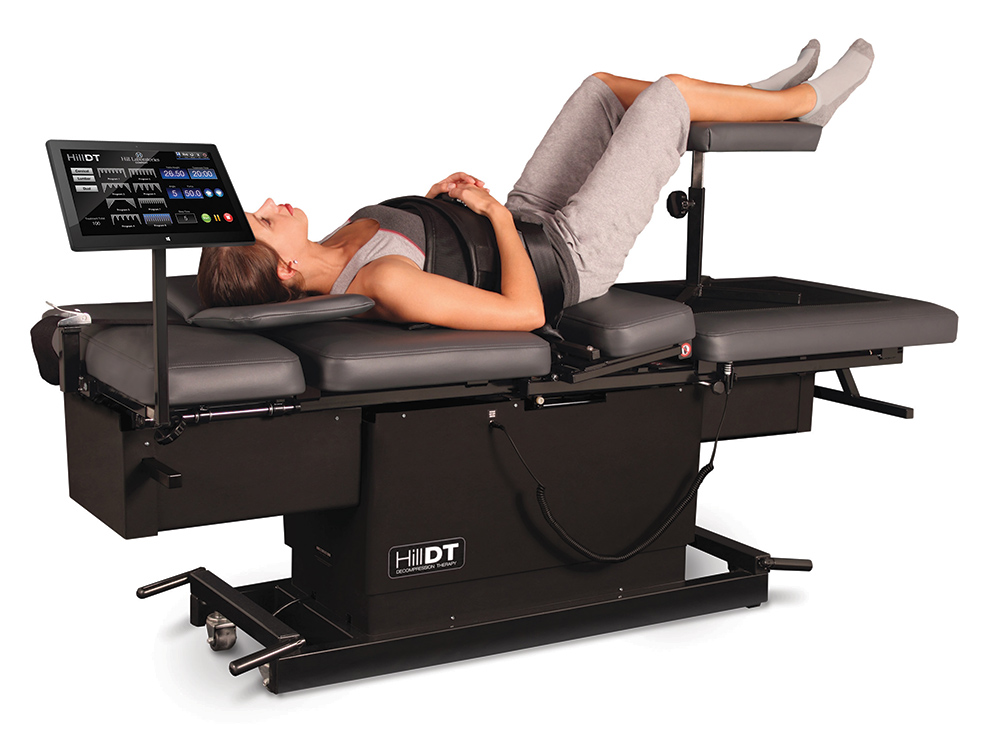
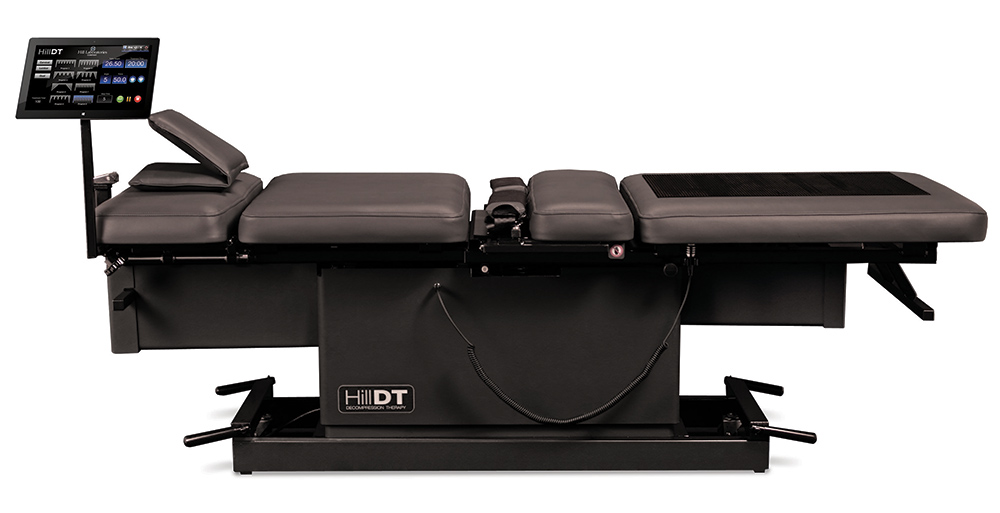
Not all decompression tables are equal. The Hill-DT system is the high-end, computer-controlled table we use at every Charleston Pain Relief Center decompression session. It measures the resistance of your back muscles in real time and modulates the pull so your body never tenses up — that's the difference between a gentle, guided decompression and the basic traction you'd get on a generic table.
Real-time muscle resistance sensing
The Hill-DT continuously measures how your back is reacting and modulates the pull so guarding muscles never trigger. That's why patients describe it as "relaxing" instead of "stretching."
Lumbar & cervical settings
The same Hill-DT table treats both lumbar (low back) and cervical (neck) disc problems with different harness configurations. One device, full-spine coverage.
Programmable per disc level
We dial the table to the exact disc segment causing your pain — L4-L5, L5-S1, C5-C6, wherever — so the negative pressure is targeted, not generic.
Disc & nerve conditions decompression treats
Spinal decompression specifically targets pressure-related disc and nerve problems. If your imaging report includes any of these terms, decompression is likely a strong candidate for your case:
Early disc pain
When a disc first starts causing pain, decompression takes pressure off it early to help relieve your pain.
Sciatica from disc compression
If your sciatica traces back to a disc squeezing the nerve root — decompression treats the cause, not just the symptom.
Cervical disc problems
Neck disc pain with arm pain, tingling or numbness. Cervical decompression is a separate setup but the same principle.
Spinal stenosis
When the canal narrows around the spinal cord. Decompression creates intermittent space the bone can't, easing standing and walking pain.
Age-related disc changes
Discs change normally with age. Decompression brings fluid and nutrients back to the disc area, so many people move more comfortably.
Failed back surgery syndrome
Pain that came back (or never left) after spinal surgery. Once surgical sites have healed, gentle decompression is often the safest next step.
Irritated nerve / radiating pain
Wherever the disc is squeezing a nerve root — lumbar or cervical — decompression takes pressure off the source.