SoftWave® is an FDA-cleared form of shockwave (acoustic-wave) therapy. At Charleston Pain Relief Center in North Charleston, SC, we use it drug-free and non-surgically to treat plantar fasciitis, tennis and golfer’s elbow, knee, shoulder and back pain, Achilles trouble, and peripheral neuropathy — stimulating blood flow and the body’s natural repair response. Most patients complete a short series of sessions rather than one visit. Individual results vary.
By the numbers: FDA-cleared device · ~10-minute sessions · no needles, no downtime.
SoftWave Shockwave Therapy in North Charleston, SC
Wake up the cells that should have healed. Without drugs or downtime.SoftWave TRT delivers focused acoustic shockwaves into damaged tissue — triggering stem cell migration, breaking up scar tissue, increasing blood flow and shutting off chronic pain signals. 10-minute sessions. No anesthesia. No needles.
Pain Relief · North Charleston
Get your pain relief plan by text
One tap sends us a text that is already written for you. We reply with what we would look at, what it costs, and this week’s openings.
★ Your 15-minute consult is free
Prefer to talk? Call 843-604-2276
Scan it with your phone camera
The message is already written. Send it and we reply with the details.
On your phone right now? Call 843-604-2276
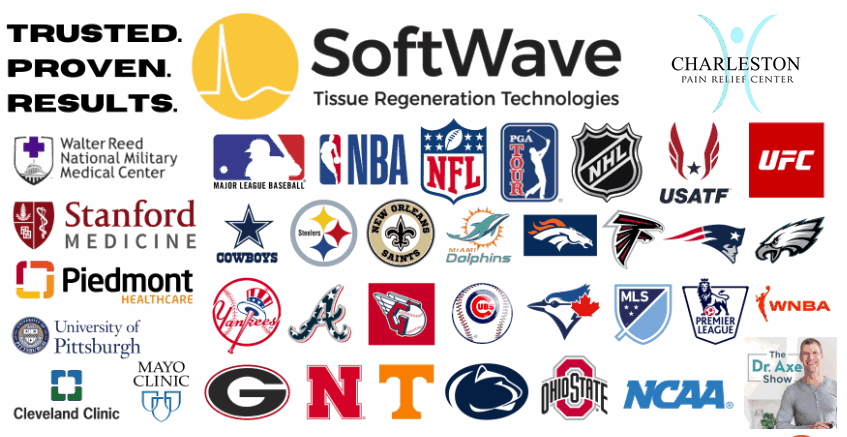
The same SoftWave® technology trusted by the pros — and the world’s top hospitals
You don’t have to be a pro athlete to get pro-level recovery. The exact FDA-cleared SoftWave® shockwave therapy used by the NFL, NBA, MLB, Walter Reed, Stanford Medicine and Mayo Clinic is right here in North Charleston, SC.
Pick a date — SoftWave evaluations available this week
How SoftWave shockwave therapy actually works
This isn’t the same as the radial pressure-wave devices most clinics call “shockwave.” SoftWave TRT uses focused, parabolic acoustic shockwaves that penetrate deeper, treat a broader area, and trigger a cellular healing response — not just numb the surface.
Mechano-transduction
The acoustic wave hits damaged tissue, deforming cell membranes and triggering an electrical signal — your body interprets it as “fresh injury, send help.”
Stem cell migration
Native stem cells — the ones that should have healed the area years ago — wake up and migrate to the treatment site. SoftWave is one of the few non-surgical therapies that can recruit them in this way.
New blood vessels form
Vascular endothelial growth factor (VEGF) spikes. Tiny new capillaries grow into the injured area, finally delivering the oxygen and nutrients it never got.
Scar tissue breaks up
The shockwaves mechanically disrupt fibrotic adhesions and calcific deposits — the gunk that keeps tendons and ligaments stiff and sore.
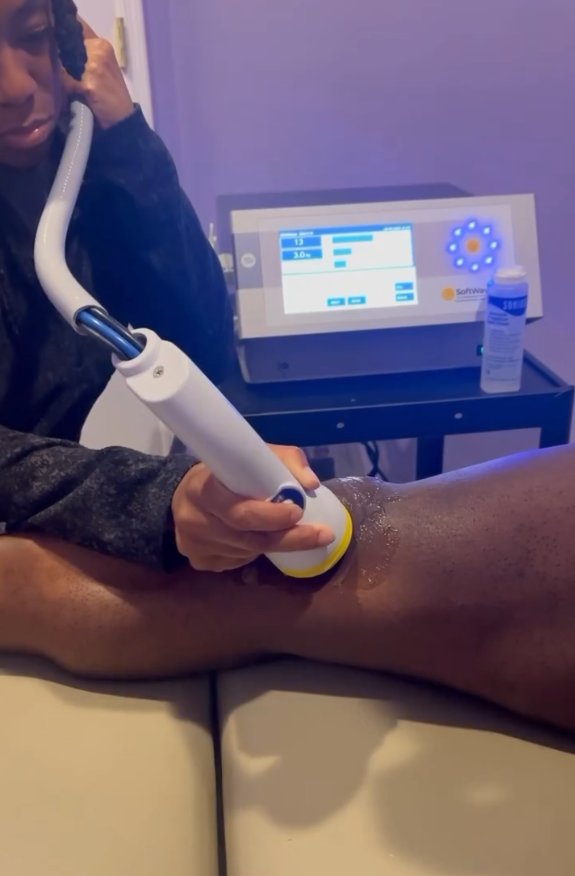
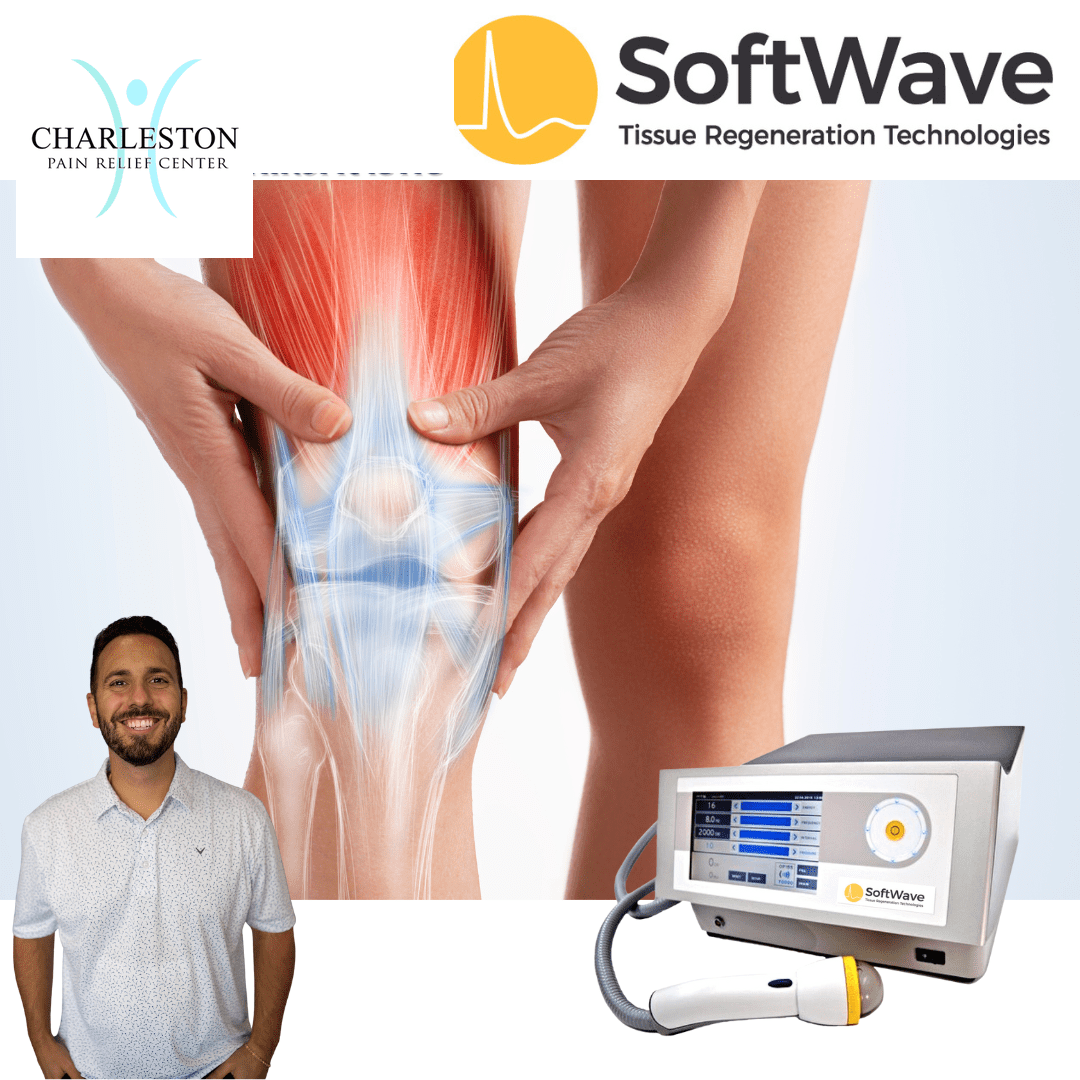
The SoftWave OrthoGold 100 — patented focused-wave technology
The OrthoGold device is FDA-cleared for the treatment of activation of connective tissue, improved blood supply, and pain reduction. Manufactured by SoftWave, it’s the same technology used by major sports teams and orthopedic centers — and we have it on-site at our North Charleston clinic.
Conditions SoftWave shockwave therapy treats
Best results come on chronic soft-tissue conditions where conventional care has plateaued. If your pain has been around longer than 3 months and standard treatments haven’t moved the needle — SoftWave is often what finally does.
Plantar fasciitis
Heel pain that’s worst on the first step out of bed. SoftWave breaks up the chronic fascia adhesions and triggers fresh tissue regeneration.
Tennis elbow & golfer’s elbow
Lateral and medial epicondylitis — chronic tendon pain that comes back every time you grip something. SoftWave restarts the healing process the body abandoned.
Frozen shoulder & rotator cuff
Shoulder adhesions and chronic rotator cuff tendinopathy. SoftWave is often the alternative to cortisone injections that come back stronger.
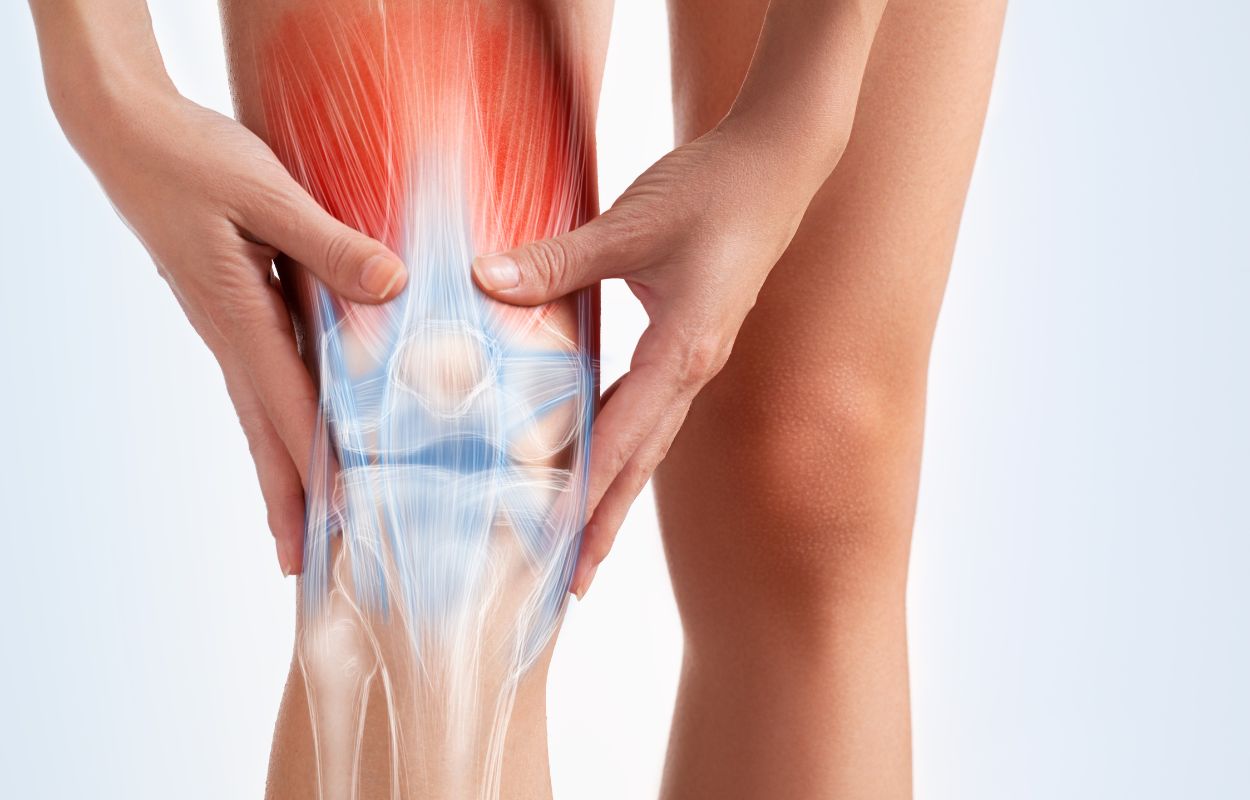
Knee pain & arthritis
Patellar tendinopathy, IT band syndrome, mild-to-moderate knee osteoarthritis. SoftWave reduces inflammation and stimulates cartilage support tissue.
See knee pain optionsAchilles tendinopathy
Chronic Achilles pain that’s resisted stretching, ice, and rest. SoftWave’s deep penetration reaches the actual tendon damage.
Hip pain & bursitis
Trochanteric bursitis and chronic hip pain that hurts on stairs and side-sleeping. SoftWave addresses the underlying soft-tissue inflammation.
See hip pain optionsChronic back pain
Back pain that’s stuck in inflammation — typically 6+ months old and not responding to medication or PT. Often used in combination with chiropractic and decompression.
Visit Back Pain hubPeripheral neuropathy
SoftWave is part of our Charleston Neuropathy Protocol — increases blood flow to nerve endings and supports nerve regeneration in feet and hands.
Visit Neuropathy hubCalcific tendinitis
The shockwaves mechanically break up calcium deposits in tendons — particularly effective in the shoulder.
Scar tissue & adhesions
Old surgical scars, sports injuries, post-trauma adhesions. SoftWave disrupts fibrotic tissue and restores normal mobility.
Sports injuries
Sprains, strains, soft-tissue injuries from running, racquet sports, golf, basketball, soccer. We treat athletes of all levels.
See sports injury pageTrigger points & myofascial pain
Stubborn muscle knots that won’t release with massage or stretching. SoftWave drops the trigger point’s firing rate and restores muscle length.
What to expect during a SoftWave session
About 10 minutes per area
SoftWave sessions are short. The applicator is held against the treatment area; you’ll hear a tapping sound and feel a pulsing sensation, but it’s not painful.
5–8 sessions typical
Most chronic conditions take 5–8 sessions, usually one per week. Acute injuries can resolve in 3–5. We re-evaluate after the first 3 visits.
No drugs, no downtime
Walk in, walk out. No anesthesia, no recovery time, no activity restrictions afterward. Athletes can train the same day.
Often combined with our other therapies
SoftWave layers beautifully with Class IV laser, chiropractic and Hill-DT decompression. Patients with chronic back or knee pain often get all three on the same visit.
Who’s not a candidate
SoftWave is one of the safest non-invasive therapies available, but it isn’t right for everyone. We won’t recommend it if any of these apply:
- Pregnancy (unless treating an extremity, with physician clearance)
- Active malignancy at or near the treatment site
- Uncontrolled blood-clotting disorder
- Active infection at the treatment site
- Pacemaker (relative contraindication; we evaluate case-by-case)
SoftWave TRT vs traditional radial shockwave
If a clinic offers “shockwave therapy,” it’s worth asking which type. The difference between focused (SoftWave) and radial pressure-wave devices is significant:
SoftWave TRT (focused, parabolic)
- Penetrates 4-6 inches deep
- Treats a broad area per pulse
- Activates stem cells via mechano-transduction
- FDA-cleared for connective tissue activation, blood flow improvement, and pain reduction
- Relatively comfortable — patients describe it as “tapping”
- Used by NFL, NBA and professional teams
Radial pressure-wave shockwave
- Penetrates only 1-2 inches
- Treats only the small area directly under the applicator
- Doesn’t reliably trigger stem cell response
- Often more uncomfortable — “ballistic” feel
- Cheaper equipment, cheaper sessions, but typically requires more visits with weaker outcomes
- Generally used in chiropractic and PT clinics that haven’t invested in focused tech
Our SoftWave OrthoGold is the focused, FDA-cleared system — the same tech used by major sports medicine clinics nationwide.
Top shockwave therapy brands compared — and where SoftWave OrthoGold fits
If you’ve been researching shockwave therapy near Charleston, you’ve likely run into the major brand names: Storz MasterPuls, BTL, EMS Swiss DolorClast, Chattanooga Intelect, PiezoWave, and Richard Wolf. Each operates a different mechanism — focused, radial, or piezoelectric. Here’s the honest landscape so you understand what you’re actually getting:
SoftWave OrthoGold 100 (focused)
Patented parabolic focused-wave technology — penetrates 4–6 inches deep, treats a broader area per pulse, and triggers stem cell migration via mechano-transduction. The same focused-wave category as PiezoWave and Richard Wolf, but with the broader treatment field SoftWave is known for. Used by NFL, NBA and orthopedic centers nationally.
Storz MasterPuls
One of the most-used radial shockwave brands in the U.S. Solid mid-tier device, common in physical therapy and chiropractic clinics. Radial pressure-wave mechanism — penetrates 1–2 inches.
BTL Shockwave
European brand widely used in U.S. PT clinics. Radial system with strong marketing presence. Comparable to Storz in mechanism and depth.
EMS Swiss DolorClast
Another major radial pressure-wave system, Swiss-engineered. Premium price tier. Strong research backing for plantar fasciitis specifically.
Chattanooga Intelect
The Chattanooga group’s shockwave line. Common entry point for clinics adding shockwave. Lower power output than premium European brands.
PiezoWave
Piezoelectric focused shockwave system. Very precise, deep penetration. Often used in research and orthopedic settings.
Richard Wolf
German precision focused shockwave brand. Premium clinical and research-grade. Less common in chiropractic, more common in orthopedic surgery centers.
The mechanism distinction that matters: Storz, BTL, EMS, and Chattanooga are radial pressure-wave systems — they treat surface-level soft tissue (1–2 inches deep) and don’t reliably trigger stem cell migration. SoftWave OrthoGold, PiezoWave, and Richard Wolf are focused-wave systems — they penetrate deeper and activate the cellular healing response. If your case is chronic, deep, or has plateaued on radial shockwave, focused-wave on the SoftWave OrthoGold is what we’d recommend.
SoftWave patients across greater Charleston
Our SoftWave OrthoGold device sits at our North Charleston clinic, central to the Lowcountry. Patients drive in from across the region for chronic pain that hasn’t responded elsewhere.
Also serving Mount Pleasant, West Ashley, Daniel Island and Moncks Corner. Call (843) 604-2276 if you don’t see your city.
SoftWave is one piece of the puzzle
SoftWave is most powerful when paired with related care. If your pain has a structural component — a disc, an adjustment issue, deep tissue inflammation — start here:
Back pain treatment
If your back pain has a chronic component, SoftWave layered with chiropractic and laser is often the combination that finally works.
Visit the Back Pain hubSpinal decompression
Disc-specific cases benefit from Hill-DT decompression alongside SoftWave for the surrounding soft tissue inflammation.
See spinal decompressionClass IV laser therapy
SoftWave + laser is our chronic pain combo. Different mechanisms, complementary results, often same-visit treatment.
Learn about laser therapyChiropractic care
For sports injuries and chronic back/neck pain, adjustments restore joint motion while SoftWave heals the soft tissue around it.
See chiropractic careSoftWave for athletes
Sport-specific deep dives on how SoftWave helps recovery — for amateurs and competitive athletes alike:
Pickleball
Tennis elbow, rotator cuff strain, achilles, plantar fasciitis — the SoftWave checklist for pickleballers.
Read the pickleball guideTennis
Rotator cuff injuries respond exceptionally well to SoftWave — full read on the mechanism for tennis players.
Read the tennis guideBasketball
Jumper’s knee, ankle sprains, achilles, plantar fasciitis — SoftWave for basketball.
Read the basketball guideGolf
Golfer’s elbow, lower back, hip and wrist — SoftWave for golfers wanting to play pain-free.
Read the golf guideSoccer
Hamstring strains, groin pulls, calf injuries — SoftWave gets soccer players back on the pitch faster.
Read the soccer guideFootball
SoftWave for football’s chronic shoulder, knee and hamstring issues.
Read the football guideWhat our 392+ patients are saying
Two ways to start
Free Phone Consultation
Tell us where it hurts and what you’ve tried. We’ll tell you straight whether SoftWave is the right next step — no clinic visit required.
Book a phone consult In-ClinicFree In-Clinic Consultation
15-minute in-person evaluation. Bring imaging if you have it. We examine, listen, and recommend the right therapy stack for your case.
Book in-clinic consultSoftWave shockwave therapy, answered
Medically reviewed by Dr. Angela Tharnish, DC — Founder, Charleston Pain Relief Center · 18+ years in practice · Last updated July 2026.
Is SoftWave TRT FDA-cleared?
Yes. SoftWave Tissue Regeneration Technology is FDA-cleared for activation of connective tissue, improved blood supply and pain reduction. The OrthoGold 100 device we use is the focused-wave (parabolic) version, not the radial pressure-wave units common in basic shockwave clinics.
Does SoftWave hurt?
No. Most patients describe it as a tapping or pulsing sensation. The applicator is held against the skin with gel; you’ll hear the device but it’s not painful. We can adjust intensity if any spot is sensitive.
How is SoftWave different from regular shockwave therapy?
SoftWave uses focused, parabolic acoustic waves that penetrate 4 to 6 inches deep and treat a broader area per pulse. Most “shockwave” devices in chiropractic and PT clinics are radial pressure-wave units — they only reach 1 to 2 inches deep and don’t reliably trigger the stem cell response that focused shockwaves do.
How many SoftWave sessions will I need?
Most chronic conditions take 5 to 8 sessions, typically one per week. Acute injuries often resolve in 3 to 5. We re-evaluate after the first 3 visits and adjust the plan based on your response.
What conditions does SoftWave treat best?
SoftWave is most effective for chronic soft-tissue conditions: plantar fasciitis, tennis and golfer’s elbow, frozen shoulder, rotator cuff tendinopathy, knee pain and patellar tendinopathy, achilles tendinopathy, calcific tendinitis, hip bursitis, chronic back pain, peripheral neuropathy, and stubborn scar tissue or adhesions.
Can I exercise after a SoftWave session?
Yes. There’s no downtime. Athletes regularly train the same day. Some patients feel mild soreness for 24 hours after a session — that’s the body’s healing response activating, not damage.
Will my insurance cover SoftWave?
SoftWave is typically not covered by insurance — but it’s significantly more affordable than the cortisone, surgery and PT alternatives most patients have already tried. We offer transparent package pricing and HSA/FSA cards are accepted.
Can SoftWave help if I’m scheduled for surgery?
Often yes. Many patients we see have already been told they need surgery for plantar fasciitis, rotator cuff tears, or chronic tendon issues. SoftWave is worth a 5 to 8 session trial before committing — it’s non-invasive and the surgery is still on the table if SoftWave doesn’t deliver.
How does SoftWave OrthoGold compare to Storz, BTL, EMS DolorClast or Chattanooga?
Storz MasterPuls, BTL, EMS Swiss DolorClast, Chattanooga Intelect, PiezoWave and Richard Wolf are the most-searched shockwave brands. The most important distinction isn’t brand — it’s mechanism. Storz, BTL, EMS, and Chattanooga are radial pressure-wave systems (1–2 inch penetration, broader marketing reach). SoftWave OrthoGold, PiezoWave and Richard Wolf are focused-wave systems (4–6 inch penetration, true stem cell activation). If your condition is chronic, deep, or has plateaued on radial shockwave, focused-wave on the SoftWave OrthoGold delivers a different category of result.
Where are you located?
Charleston Pain Relief Center is at 2294 Otranto Rd, North Charleston, SC 29406 (get directions on Google Maps) — central to Charleston, Mt Pleasant, West Ashley, Summerville, Goose Creek, Hanahan, Daniel Island and Ladson.
Do I need a referral for SoftWave therapy?
No. Anyone can book a free SoftWave consultation — no referral or doctor’s note needed. Call (843) 225-2550 to get started.
How long is a SoftWave session?
Most SoftWave sessions take about 10–15 minutes. There’s no downtime — you can return to your normal activities right after.
Is SoftWave drug-free and non-surgical?
Yes. SoftWave is completely drug-free and non-surgical — it uses focused acoustic waves to stimulate your body’s own healing response, with no needles, medication, or recovery time.
How soon will I feel results from SoftWave?
It varies. Some patients notice changes within a few sessions; others progress over several weeks. Outcomes depend on your condition, age, and overall health — we track your progress at each visit.
What does SoftWave therapy cost?
Your consultation is free. If you want to move forward, your exam and first SoftWave session are $49. After your exam we give you a clear, written plan with transparent pricing before anything begins — no surprises and no pressure.
Does SoftWave shockwave therapy actually work?
Yes — for the right conditions. SoftWave® is an FDA-cleared form of shockwave (acoustic wave) therapy that sends focused sound waves into injured tissue to spark your body’s natural repair response and improve local blood flow. It works best for tendon, joint, and soft-tissue pain that hasn’t fully healed — plantar fasciitis, tennis and golfer’s elbow, knee and shoulder pain, and Achilles trouble. Most patients complete a short series of sessions rather than one visit, and Dr. Angela Tharnish, DC will tell you honestly at your evaluation whether you’re a good candidate. Individual results vary.
Is SoftWave therapy effective for neuropathy and nerve pain?
Many patients come to us for peripheral neuropathy — numbness, tingling, and burning in the feet — and SoftWave® is often part of their plan alongside our neuropathy protocol. The acoustic waves boost circulation and stimulate tissue repair in the treated area, which can support nerve health. Ken, a real CPRC patient who could not feel his feet, regained sensation on a combined SoftWave and laser protocol. Neuropathy has many causes, so results vary — we start with an evaluation to see whether SoftWave is right for you.
Does SoftWave work for plantar fasciitis and heel pain?
Plantar fasciitis is one of the conditions SoftWave® shockwave therapy is best known for. The focused acoustic waves target the inflamed plantar fascia and heel to ease pain and stimulate healing — often when stretching, orthotics, and cortisone haven’t lasted. It’s non-surgical, drug-free, and needs no downtime, so you can walk out and get on with your day. Most heel-pain patients do a short series of sessions; your evaluation maps out how many.
If chronic pain is winning — let’s change that.
SoftWave is what we reach for when other things have plateaued. 15-minute evaluation, no commitment. We’ll tell you straight whether it’s right for your case.
Need shockwave therapy near me?
If you searched “shockwave therapy near me,” our North Charleston team at 2294 Otranto Rd offers SoftWave to patients throughout North Charleston, Ladson, Goose Creek and Hanahan. Many shockwave patients also ask about these related treatments:
Book Your Visit →